Assisted Living vs. Home Care: True Cost Comparison for 2026
Detailed cost comparison of assisted living facilities versus home care and aging-in-place modifications.

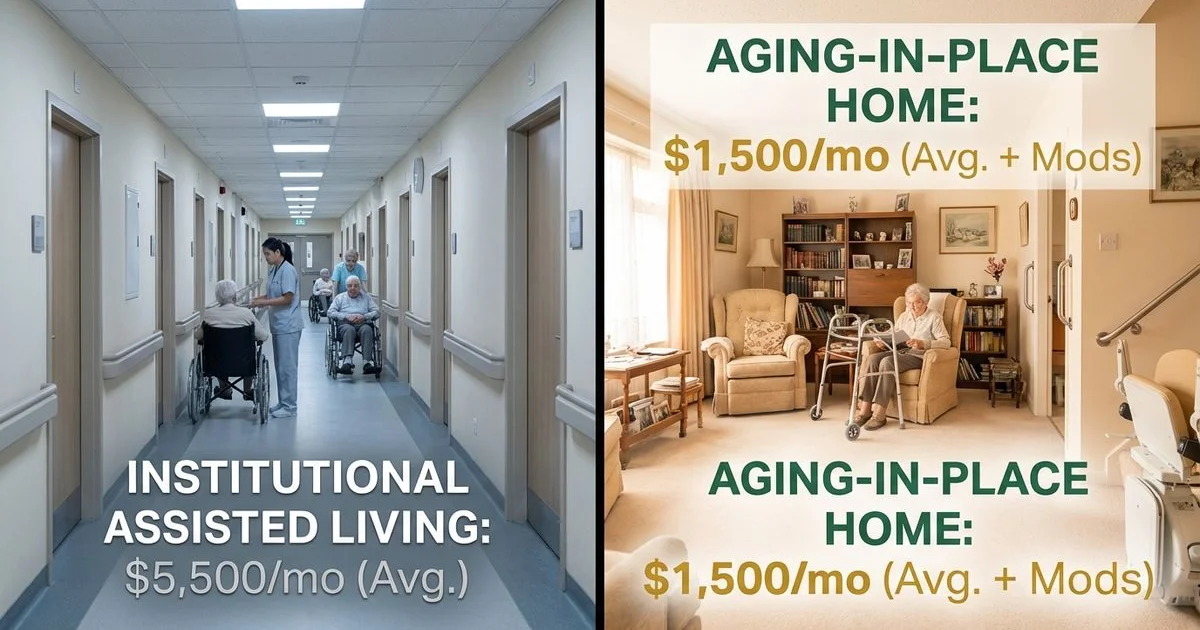
The Real Cost Question Every Family Faces
You know the feeling when the numbers just don’t add up.
We see families grapple with this exact spreadsheet problem every single day.
The decision between assisted living and home care is not just about emotional comfort.
It is a critical financial strategy that impacts your real estate assets and long-term liquidity.
Most people look at the monthly rent and stop there.
Our team has analyzed the data to show you why that is a mistake.
The real answer depends on the trajectory of care needs and the hidden inflation of service fees.
This guide provides a transparent, data-driven comparison using 2026 national averages.
We aim to give you the leverage you need to negotiate and plan effectively.
Let’s break down the base rates, the hidden add-ons, and the long-term ROI of each path.
Assisted Living Costs in 2026
The sticker price is rarely the final price.
We track these figures closely, and the national median cost for assisted living in 2026 hovers around $5,511 per month, based on inflation-adjusted projections from the Genworth Cost of Care datasets.
That totals roughly $66,132 per year.
Geography dictates the baseline more than any other factor.
What the Base Rate Covers
You need to understand exactly what “rent” buys you.
Most facilities structure their base rate to cover:
- Housing: A private or semi-private apartment.
- Nutrition: Three standardized meals a day plus snacks.
- Maintenance: Weekly housekeeping and flat linen laundry service.
- Lifestyle: Access to common areas, gyms, and scheduled social activities.
- Safety: 24-hour security presence and emergency call systems.
- Basic Oversight: minimal medication management or reminders.
Additional Costs Beyond the Base Rate
The “Level of Care” assessment is where the budget often breaks.
We warn clients that facilities use point systems to calculate these fees.
A resident needing help with bathing or dressing will trigger a tier jump immediately.
Here is the breakdown of the specific surcharges we see most often in 2026 contracts:
| Additional Service | Typical Monthly Cost | Why It Matters |
|---|---|---|
| Tiered Care (Levels 2-4) | $600 - $2,500 | Often triggered by a fall or health decline. |
| Memory Care Add-on | $1,800 - $4,000 | Required for wandering or behavioral needs. |
| Incontinence Management | $300 - $600 | Does not typically include the cost of supplies. |
| Medication Administration | $350 - $900 | Techs handing out pills vs. just reminding. |
| Escort Service | $150 - $400 | Staff assistance to get to the dining room. |
| Community Fee | $2,000 - $6,000 | A one-time, non-refundable “buy-in” charge. |
Factoring in these variables changes the equation significantly.
The true monthly output for a senior with moderate needs often lands between $7,200 and $9,800.
Regional Cost Variations
Your zip code is the primary cost multiplier.
Real estate values and local labor laws drive these operational costs directly.
| Region | Monthly Cost Range | Market Context |
|---|---|---|
| Northeast (MA, NJ, NY) | $6,800 - $11,500 | High real estate and union labor costs. |
| West Coast (CA, WA) | $6,000 - $10,200 | Strict staffing ratios increase prices. |
| Midwest (OH, MN, WI) | $4,200 - $7,000 | Lower overhead keeps prices moderate. |
| South (TX, FL, GA) | $4,000 - $6,500 | Competition among providers lowers rates. |
| Rural Markets | $3,200 - $5,200 | Limited medical access offsets lower rent. |
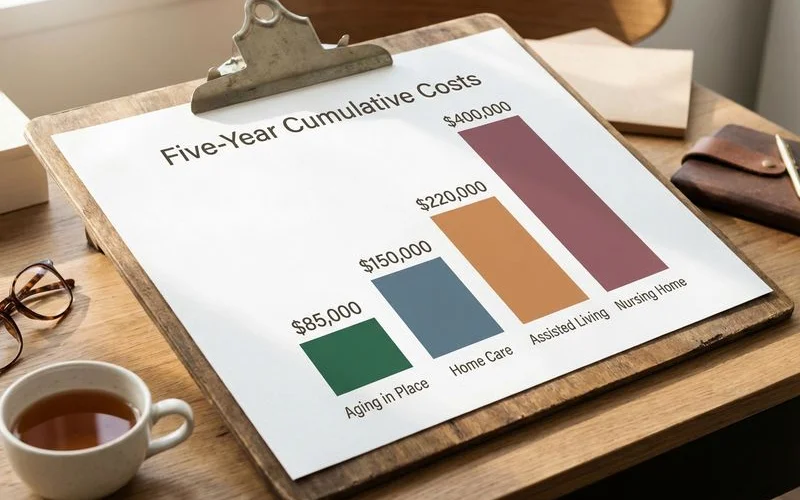 The five-year cost difference between facility care and aging in place is substantial for most families
Home Care and Aging-in-Place Costs in 2026
Staying home requires shifting your budget from “rent” to “logistics.”
We advise treating the home as a facility that you must manage yourself.
Costs split into two buckets: capital improvements and labor.
One-Time Home Modification Costs
Your home must physically adapt to a changing body.
We have audited hundreds of properties to identify necessary safety upgrades.
Universal design features like lever-style door handles and smart lighting are essential baselines.
| Modification | Cost Range | Installation Notes |
|---|---|---|
| Bathroom Grab Bars | $250 - $900 | Must be anchored to studs, not drywall. |
| Curbless Shower | $4,000 - $9,500 | High ROI for resale value. |
| Curved Stair Lift | $9,000 - $15,000 | Custom rails are expensive but necessary for turns. |
| Modular Ramp | $1,500 - $5,000 | Aluminum ramps are removable; wood is permanent. |
| Doorway Widening | $800 - $3,000 | Requires structural header work. |
| Flooring Replacement | $2,000 - $5,000 | Removing trip hazards like plush carpet. |
| Smart Sensors | $600 - $2,500 | Monitoring systems like StackCare or Ecobee. |
A functional aging-in-place retrofit usually runs between $18,000 and $45,000.
This expense acts as a capital improvement to the asset rather than a sunk cost.
Ongoing Home Care Costs
Labor is the single largest line item for home-based seniors.
We find that families often underestimate the hourly rates for bonded and insured agencies.
Using a private hire (paying a neighbor or friend) carries significant tax and liability risks that most homeowners should avoid.
| Care Level | Hours/Week | Monthly Cost |
|---|---|---|
| Companion Care | 12 | $1,400 - $2,200 |
| Personal Care Aide | 20 | $2,400 - $4,500 |
| Home Health Aide | 30 | $4,000 - $6,800 |
| Full-Time Support | 45 | $7,800 - $13,000 |
| 24/7 Live-In | 168 | $9,000 - $18,000 |
Agencies in 2026 are charging a national median of $36 per hour.
A schedule of 20 hours per week will likely cost you $3,100 monthly.
The Five-Year Cost Comparison
Data clarifies the long-term impact on your estate.
We projected these costs over 60 months to reveal the break-even points.
Scenario: Senior Needing Moderate Daily Assistance
| Cost Category | Aging in Place | Assisted Living |
|---|---|---|
| Year 1 Modifications | $28,000 | $0 |
| Year 1 Care/Rent | $37,200 | $82,000 |
| Year 1 Total | $65,200 | $82,000 |
| Years 2-5 Care | $156,000 | $0 |
| Years 2-5 Facility | $0 | $348,000 |
| 5-Year Total | $221,200 | $430,000 |
| Net Savings | $208,800 | — |
Keeping the home allows you to control the asset while reducing cash outflow by over $200,000.
That equity remains in the family estate rather than going to a corporate provider.
Key Insight: Assisted living costs compound annually at 3-6%, while your mortgage (if you have one) stays fixed. This differential accelerates savings over time.
Hidden Costs Often Overlooked
Spreadsheets rarely capture the full friction of daily life.
We urge you to account for these “invisible” expenses that surprise families later.
Hidden Assisted Living Costs
- Pharmacy Packaging Fees: Facilities often mandate using their preferred pharmacy, which charges for “bubble packing” meds.
- Transportation Levies: Getting to a doctor’s appointment often incurs a per-mile or flat-rate fee if outside scheduled days.
- Incontinence Supplies: Buying briefs through the facility can cost 30-40% more than purchasing them yourself at Costco or Amazon.
- Move-Out Fees: Many contracts require 30-60 days’ notice or payment upon death or sudden transfer.
Hidden Aging-in-Place Costs
- Utility Spikes: Medical equipment (oxygen concentrators) and keeping the heat higher for senior comfort increase energy bills.
- Property Maintenance: You must pay for snow removal, gutter cleaning, and lawn care that the senior can no longer handle.
- Food Delivery Surcharges: Relying on services like Instacart or DoorDash adds 15-20% to food budgets.
- Social Isolation Risks: Depression from loneliness can lead to physical decline, triggering higher medical costs.
 Aging in place allows seniors to maintain independence in familiar surroundings at a fraction of facility costs
When Assisted Living Makes Financial Sense
Sometimes the facility model is the smarter economic play.
We recognize specific tipping points where home care becomes unsustainable.
- The 24-Hour Threshold: Once a senior needs eyes-on supervision overnight, home care costs ($15,000+/month) skyrocket past facility rates.
- Structural Obsolescence: If a home requires an elevator or extensive foundation work ($80,000+) to be safe, the capital outlay may not offer a return.
- Social Health Needs: For extroverted seniors, the cost of replicating a vibrant social calendar at home is prohibitive.
- Caregiver Opportunity Cost: If an adult child quits a $100,000 job to provide “free” care, the household loses more wealth than the cost of a facility.
Financial Assistance Options
You do not have to drain every account to pay for care.
We help clients identify diverse funding streams to offset these expenses.
For Aging in Place
- Medicaid HCBS Waivers: These state-specific programs can pay for renovations like ramps and bathroom safety.
- VA Aid and Attendance: A pension addition providing up to $2,400 monthly for qualifying veterans.
- Tax Deductions: Medical modifications to a home are often deductible if they exceed 7.5% of AGI.
For Assisted Living
- Long-Term Care Insurance: Policies purchased years ago can trigger daily benefits ranging from $100 to $400.
- Bridge Loans: Short-term financing to cover buy-in fees while waiting for a home to sell.
- Life Settlement: Selling a life insurance policy to a third party for a lump sum cash payment.
Action brings clarity.
We recommend you start with a professional home safety assessment to get hard numbers on the modifications required.
This data allows you to compare apples to apples.
Check our senior care directory to benchmark local provider rates against your home care budget.
Ready to Take Action?
Learn more about our comprehensive senior care directory solutions and how they can help your family.
Explore Senior Care Directory About James Wilson
Home Safety Assessment Specialist
Certified home safety specialist with 10+ years of residential accessibility evaluation experience.
Related Articles

How to Budget for Aging in Place: A Family Financial Planning Guide
Step-by-step financial planning guide for aging in place.
Does Medicare Cover Home Modifications? What's Covered and What's Not
Detailed breakdown of which aging-in-place modifications Medicare, Medicaid, and Medicare Advantage plans will and won't cover.

Senior Home Modification Grants, Loans & Assistance Programs
Complete guide to financial assistance for aging-in-place home modifications. Federal grants, state programs, VA benefits, and low-interest loans explained.