Senior Home Modification Grants, Loans & Assistance Programs
Complete guide to financial assistance for aging-in-place home modifications. Federal grants, state programs, VA benefits, and low-interest loans explained.


You Do Not Have to Pay for Everything Out of Pocket
We see it constantly: a family knows their loved one needs a walk-in shower or a stair lift, but they freeze when they see the price tag. The assumption is always that these costs must come directly from savings. The data tells a different story. Dozens of underutilized programs exist specifically to bridge this gap, yet millions of dollars in available funding go unclaimed every year simply because homeowners do not know where to look.
Our team has guided hundreds of families through this financial maze. We have seen seniors secure $14,000 for bathroom renovations through Medicaid waivers and others access $10,000 USDA grants that never need to be repaid. Funding is not just for the destitute; it is often available to middle-income families who know how to navigate the system.
This guide breaks down the most effective funding sources available in 2026. We will walk you through federal grants, specific state waivers, veteran benefits, and private financing options that can turn an overwhelming project into a manageable one.
Federal Government Programs
USDA Section 504 Home Repair Program
This program is the single most valuable resource for seniors living in rural areas. The United States Department of Agriculture (USDA) provides substantial aid to help low-income homeowners remove health and safety hazards.
- Grant amount: Up to $10,000 (lifetime maximum) for homeowners aged 62+. Grants do not have to be repaid if you occupy the home for three years.
- Loan amount: Up to $40,000 at a fixed 1% interest rate over 20 years.
- Combined funding: You can combine a grant and a loan for up to $50,000 in total assistance.
- Eligibility: You must own and occupy the home in an eligible rural area and have a household income below 50% of the area median income.
Pro Tip: Do not assume your town is “too suburban” to qualify. The USDA’s definition of “rural” is surprisingly broad and includes many areas on the outskirts of major metros. Check your specific address on the USDA eligibility map before ruling this out.
HUD Community Development Block Grants (CDBG)
The Department of Housing and Urban Development (HUD) does not usually give money directly to individuals. Instead, they award large block grants to cities and counties, which then distribute the funds to homeowners through local “Housing Rehabilitation” or “Emergency Repair” programs.
- How it works: Your city applies for the federal money and creates a local program.
- Typical caps: These vary significantly by location. For example, Chicago’s Home Repair Program has offered up to $5,000 for emergency fixes, though high demand can pause applications.
- Application route: You must contact your local city hall or county “Community Development” office, not HUD directly.
HUD Section 202 Supportive Housing for the Elderly
This program focuses on expanding affordable housing with supportive services. While primarily for nonprofit developers, residents in Section 202 housing often see unit modifications covered as part of the property’s management budget to allow aging in place.
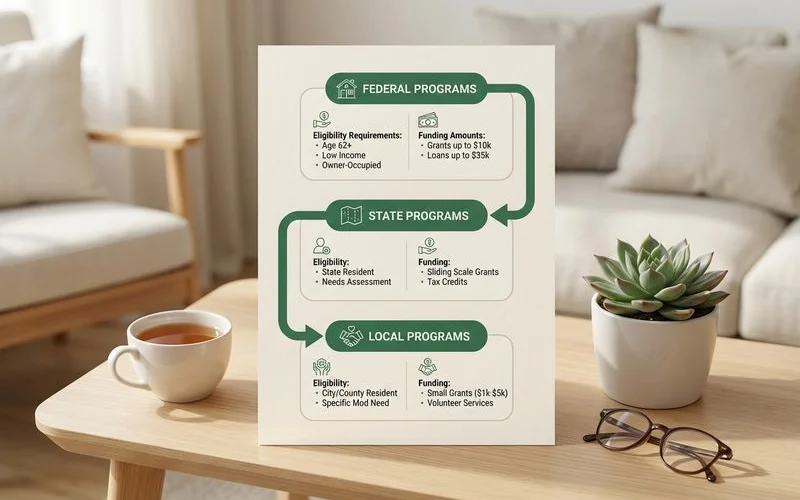 Multiple layers of government funding are available for senior home modifications
Veterans Benefits
The Department of Veterans Affairs offers some of the most comprehensive funding packages available. We strongly encourage every veteran to review these figures, as the 2026 limits have increased to reflect rising construction costs.
Specially Adapted Housing (SAH) Grant
This is the premier grant for veterans with severe service-connected disabilities.
- 2026 Grant Limit: Up to $126,526.
- Who it helps: Veterans with severe injuries, such as loss of use of legs or blindness, who need to build or remodel a home for independence.
- Flexibility: You can use this grant up to six times until you reach the total dollar limit.
Special Home Adaptation (SHA) Grant
- 2026 Grant Limit: Up to $25,350.
- Who it helps: Veterans with specific service-connected disabilities, such as blindness in both eyes or the loss of use of hands.
- Use cases: Typically used for smaller adaptation projects like installing ramps or modifying kitchens.
Home Improvements and Structural Alterations (HISA) Grant
This grant is unique because it is available to veterans for both service-connected and non-service-connected conditions.
| Disability Status | Maximum Grant Amount |
|---|---|
| Service-Connected Condition | $6,800 |
| Non-Service-Connected Condition | $2,000 |
Action Item: You apply for HISA through your local VA medical center. A VA physician must prescribe the home modification as medically necessary.
Insider Strategy: You can “stack” these grants. A qualifying veteran could theoretically use the full $126,526 SAH grant for major structural work and also use the $6,800 HISA grant for additional improvements, as they come from different funding pools.
State and Local Programs
State-level programs often provide the most accessible funding for immediate needs. These programs usually operate through Medicaid waivers or state housing finance agencies.
Medicaid Home and Community-Based Services (HCBS) Waivers
Medicaid waivers are designed to keep seniors out of nursing homes by funding changes to their private residences. Each state sets its own cap, and the differences can be dramatic.
- Colorado: The “Elderly, Blind and Disabled” (EBD) waiver offers a lifetime maximum of roughly $14,000 for home modifications.
- Texas: The “Home and Community-based Services” (HCS) waiver provides a lifetime limit of $7,500 for minor home modifications, plus an annual repair budget.
- What this means for you: You must check your specific state’s “waiver handbook.” If your state cap is lower (like Texas), you should prioritize high-impact safety items like a roll-in shower rather than aesthetic upgrades.
State Housing Finance Agency Programs
Many states run independent grant programs separate from Medicaid.
- New York: The RESTORE program channels millions in funding to municipalities to help seniors (60+) with emergency repairs.
- California: The CalHFA ADU Grant program previously offered up to $40,000.
- Warning: As of early 2026, the initial funding rounds for the CalHFA ADU grant have been fully allocated. You should monitor their website for new “Notice of Funding Availability” (NOFA) announcements, as these programs often reopen when new state budgets pass.
Area Agency on Aging (AAA) Programs
Your local AAA is often the “gatekeeper” for smaller, discretionary funds. They administer Older Americans Act monies that can pay for grab bars, ramps, and chore services.
Find your local AAA: Call the Eldercare Locator at 1-800-677-1116 or search specifically for “Area Agency on Aging [Your County].”
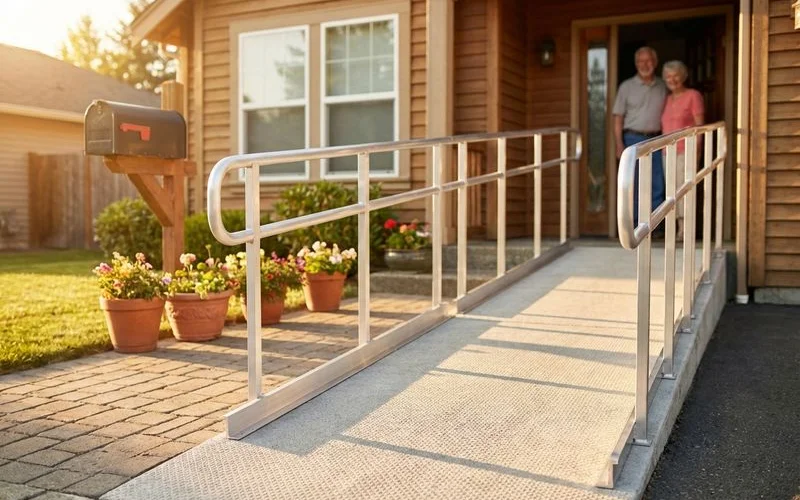 Government-funded modifications like wheelchair ramps can dramatically improve home accessibility
Nonprofit and Community Organizations
Nonprofits often have faster approval times than government agencies. We recommend applying to these concurrently with your federal applications.
Rebuilding Together
Rebuilding Together is a national powerhouse with a local focus. Their “Safe at Home” program provides critical repairs at no cost to low-income homeowners.
- Scope: They focus on safety and warmth. Think roof repairs, flooring fixes to prevent falls, and accessibility ramps.
- Eligibility: Typically targets households earning below 80% of the Area Median Income (AMI).
Habitat for Humanity “Aging in Place”
Habitat is not just about building new houses. Their Aging in Place program helps seniors stay in their current homes by performing low-cost repairs.
- Services: Ramps, widening doorways, and installing accessible doorknobs and faucets.
- Cost: Services are often provided on a sliding scale based on income, making it very affordable even if not 100% free.
Private Funding Options
Grants may not cover every expense. Private financing can fill the gap, especially for homeowners with equity.
Home Equity Conversion Mortgage (Reverse Mortgage)
For homeowners aged 62+ with significant equity, a HECM can be a powerful tool.
- 2026 Limit: The Federal Housing Administration (FHA) raised the HECM lending limit to $1,249,125 for 2026.
- The Benefit: You can draw tax-free cash to pay for renovations without making monthly mortgage payments.
- The Trade-off: The loan balance grows over time, which reduces the inheritance you leave behind.
Home Equity Loans and HELOCs
A Home Equity Line of Credit (HELOC) acts like a credit card secured by your house.
- 2026 Interest Rates: Average HELOC rates are currently hovering between 7.3% and 8.5%.
- Comparison: This is significantly higher than the 1% interest rate on the USDA Section 504 loan. We advise checking your eligibility for the USDA loan first before signing up for a private HELOC.
Medical Expense Tax Deduction
You can deduct home modifications on your federal taxes if they are medically necessary.
- The Rule: You can deduct qualified medical expenses that exceed 7.5% of your Adjusted Gross Income (AGI).
- Example: If your AGI is $50,000, your threshold is $3,750. If you spend $10,000 on a medically prescribed ramp, you can deduct the amount above that threshold.
How to Maximize Your Funding
Success requires a strategic approach. We recommend the following steps to secure the maximum amount of help.
1. Stack Your Funding Sources
Do not limit yourself to one application. You can often use a VA HISA grant to pay for the materials and a nonprofit organization’s labor to install them.
2. Secure a Professional Assessment
Most programs require proof of need. A documented home safety assessment serves as your “evidence” that a renovation is not cosmetic but essential for safety.
3. Get a Doctor’s Prescription
We cannot overstate this: get a letter from a physician. A script that says “medically necessary bathroom modification” instantly qualifies you for tax deductions and allows you to access medical-specific grants like the HISA.
4. Watch for Application Cycles
Many local programs, like Chicago’s Home Repair program or California’s grants, operate on annual budget cycles. If a program is “closed” today, ask exactly when the next funding round opens and be first in line.
5. Keep Every Receipt
You will need paper trails for everything. Even if you pay for a modification upfront, having the receipt allows you to claim the tax deduction or apply for retroactive reimbursement from certain long-term care insurance policies.
The money to make a home safe is out there. It requires persistence and a bit of paperwork, but the result—a safe, accessible home for your loved one—is worth the effort.
Ready to Take Action?
Learn more about our comprehensive home safety assessments solutions and how they can help your family.
Explore Home Safety Assessments About James Wilson
Home Safety Assessment Specialist
Certified home safety specialist with 10+ years of residential accessibility evaluation experience.
Related Articles

How to Budget for Aging in Place: A Family Financial Planning Guide
Step-by-step financial planning guide for aging in place.
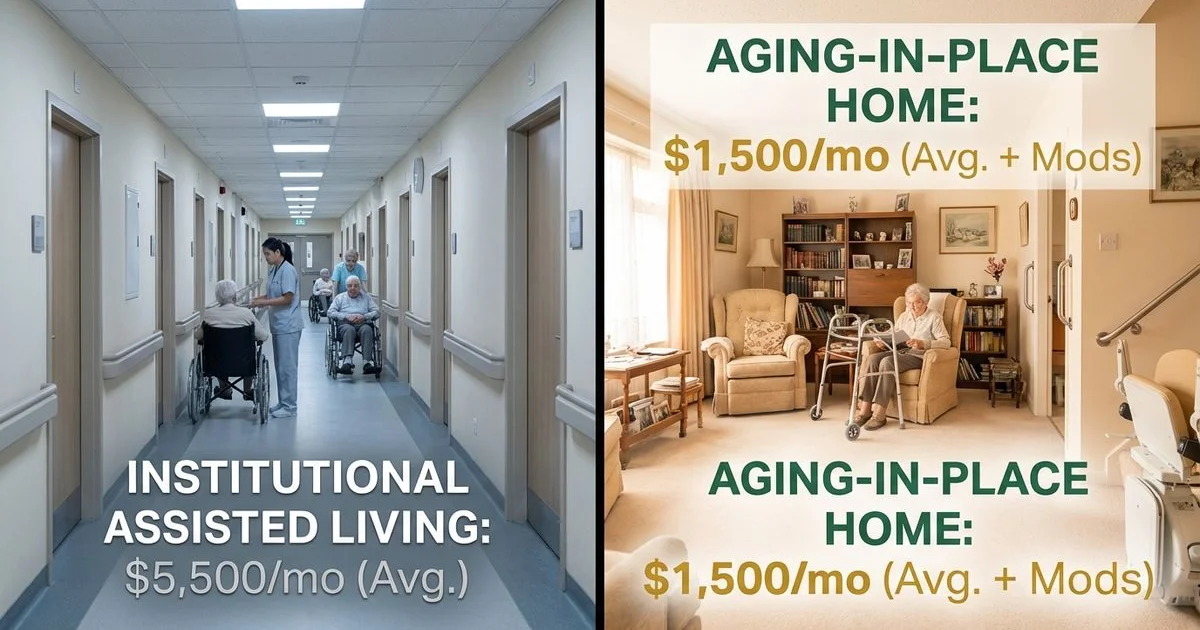
Assisted Living vs. Home Care: True Cost Comparison for 2026
Detailed cost comparison of assisted living facilities versus home care and aging-in-place modifications.
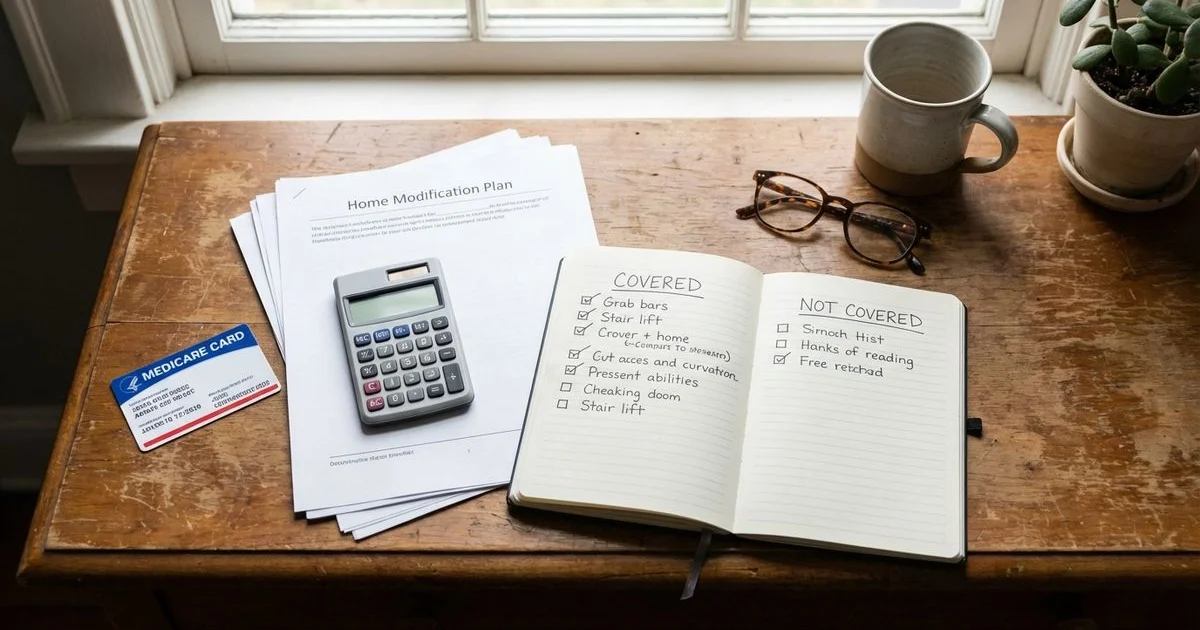
Does Medicare Cover Home Modifications? What's Covered and What's Not
Detailed breakdown of which aging-in-place modifications Medicare, Medicaid, and Medicare Advantage plans will and won't cover.