5 Evidence-Based Benefits of Hydrotherapy for Seniors
Research-backed benefits of hydrotherapy walk-in tubs for arthritis, chronic pain, and mobility issues in older adults.

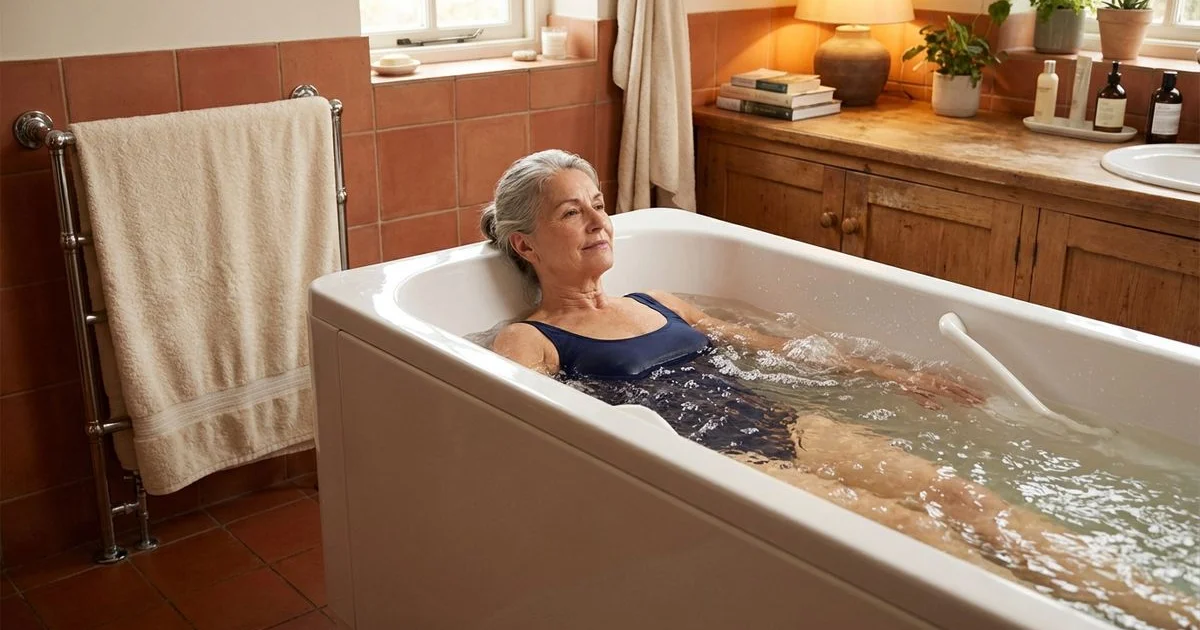
What Is Hydrotherapy and Why Does It Matter for Seniors?
We see the same challenge facing families across the country: nearly 90% of seniors want to age in place, yet their homes are rarely designed to support their changing health needs.
Hydrotherapy involves the therapeutic use of warm water, buoyancy, and water pressure.
While it has been practiced for thousands of years, modern walk-in tubs have transformed this from a spa luxury into a daily medical necessity.
Our team approaches this not as a bathroom renovation, but as a health intervention.
For older adults dealing with arthritis, chronic pain, or limited mobility, hydrotherapy acts as a legitimate therapeutic tool.
Decades of peer-reviewed research support its use.
Understanding the science behind these benefits helps you determine if a hydrotherapy walk-in tub is the right move for your home.
Benefit 1: Significant Arthritis Pain Reduction
Arthritis is the leading cause of disability in the US, now affecting an estimated 58.5 million adults according to recent CDC data.
We find that for our clients over 65, managing this pain is the single biggest factor in maintaining independence.
The Arthritis Foundation explicitly recommends warm-water therapy as a top non-pharmaceutical method for managing osteoarthritis and rheumatoid arthritis.
How It Works
Several physiological mechanisms activate the moment a senior enters warm water between 92 and 100 degrees Fahrenheit.
The warmth dilates blood vessels (vasodilation), which surges nutrient-rich blood to inflamed joints.
Buoyancy is the second factor.
Water supports approximately 90% of body weight, which instantly unloads pressure from knees, hips, and the spine.
Hydrostatic pressure provides the final layer of relief.
This constant, uniform pressure against the skin helps reduce edema (swelling) in the lower extremities, acting like a gentle compression sock for the entire body.
What the Research Shows
Clinical evidence strongly supports these observations.
A 2019 systematic review in the Journal of Clinical Rheumatology analyzed multiple studies and found that hydrotherapy sessions could reduce pain scores by roughly 40% over 12 weeks.
Patients in these studies also demonstrated measurable improvements in grip strength.
We often point out that clinical studies usually involve visiting a pool twice a week.
Having a walk-in tub at home allows for daily access, which can compound these results and provide consistent morning relief from stiffness.
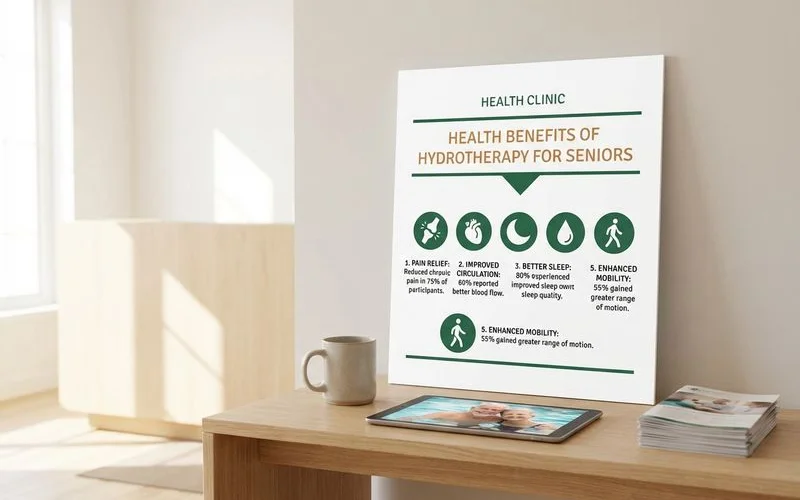 Research supports multiple therapeutic benefits of regular hydrotherapy sessions
Benefit 2: Improved Circulation and Cardiovascular Health
Poor circulation creates a cascade of issues for older adults, from cold feet to delayed wound healing.
Hydrotherapy offers a unique way to stimulate the cardiovascular system without the mechanical stress of running or weightlifting.
How It Works
Warm water immersion creates a “passive” cardiovascular workout.
The heat causes peripheral blood vessels to widen, lowering resistance against the arterial walls.
Your heart responds by pumping slightly faster and more efficiently, similar to the exertion level of a slow walk.
Hydrotherapy jets enhance this effect by targeting specific venous return points.
Strategic jet placement focuses on:
- Calves and Feet: Stimulating blood flow upward against gravity.
- Lower Back: Relieving tension that constricts blood flow.
- Thighs: Promoting circulation in large muscle groups.
This is particularly vital for seniors with limited mobility who cannot easily exercise to pump blood back to the heart.
What the Research Shows
Data reinforces the value of this passive therapy.
A study in the International Journal of Cardiology highlighted that regular warm-water immersion could improve endothelial function by 24%.
This measures how well blood vessels dilate and contract.
Participants also saw a reduction in resting systolic blood pressure by an average of 5 to 8 mmHg.
Important Note: Seniors with heart conditions must verify this therapy with their doctor first. The cardiovascular workload is generally safe, but individuals with unstable angina or congestive heart failure need specific medical clearance before using hot water immersion.
Benefit 3: Enhanced Mobility and Range of Motion
A fear of falling often leads seniors to move less, which ironically causes muscles to atrophy and increases fall risk.
We consider hydrotherapy a “safe zone” where movement becomes possible again.
How It Works
Buoyancy acts as a counter-force to gravity.
When submerged to the chest, a person effectively weighs only 10% of their actual body mass.
This allows seniors to move limbs through a full range of motion without the sharp pain they feel on land.
Water viscosity adds another benefit: safety.
Water provides natural resistance that is 600 times greater than air.
This builds strength safely because the resistance automatically adjusts to the speed of movement; if you push harder, the water pushes back harder, but it will never fall on you like a weight stack.
What the Research Shows
The link between aquatic therapy and fall prevention is well-documented.
Research in the Archives of Physical Medicine and Rehabilitation indicated that seniors partaking in aquatic therapy three times a week improved walking speed by 17%.
Even more impressive was the impact on stability.
Balance scores in the same group improved by 22%, directly correlating to a lower risk of falls in the home.
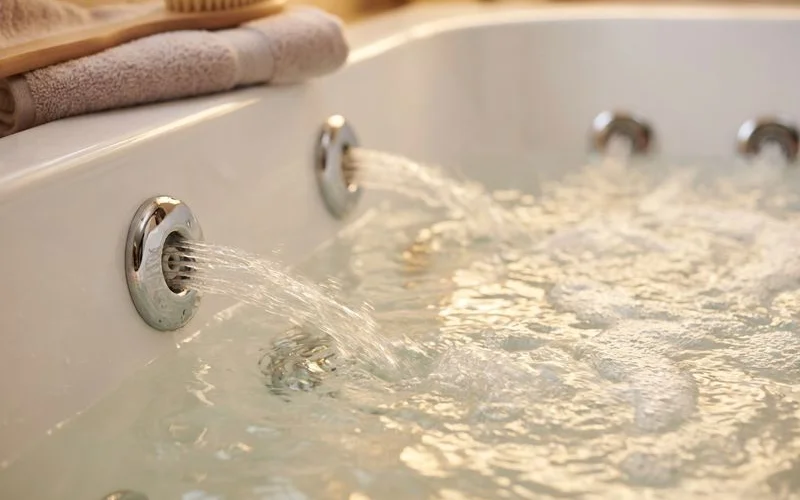 Strategically placed jets target key areas for pain relief and improved circulation
Benefit 4: Better Sleep Quality
Sleep issues plague nearly 50% of older adults, often leading to a reliance on prescription sleep aids.
We advocate for hydrotherapy as a powerful, non-pharmacological alternative to break the cycle of insomnia.
How It Works
The science here revolves around thermoregulation.
Warm-water immersion raises the core body temperature by one to two degrees.
When a senior exits the tub, that temperature drops rapidly.
This steep drop sends a biological signal to the brain’s pineal gland that it is time to sleep, mimicking the natural circadian rhythm drop that happens at night.
Cortisol levels also play a role.
The relaxation response from the warm water lowers cortisol (stress hormone) levels, which clears the path for melatonin production.
What the Research Shows
Timing is the key variable for success here.
A major meta-analysis by researchers at the University of Texas at Austin reviewed over 5,000 studies and determined that bathing 1-2 hours before bed is optimal.
The data showed this timing reduced “sleep onset latency” (the time it takes to fall asleep) by approximately 10 minutes.
For a senior staring at the ceiling, those ten minutes and the subsequent improvement in sleep depth are life-changing.
Benefit 5: Reduced Chronic Pain and Muscle Tension
Chronic pain is an epidemic among seniors, with over 50 million Americans reporting consistent pain issues.
Hydrotherapy utilizes a neurological phenomenon known as the “Gate Control Theory” to manage this without opioids.
How It Works
Pain signals travel to the brain on slow, thin nerve fibers.
Sensory signals—like the feeling of warm water and the pressure of massage jets—travel on fast, thick nerve fibers.
When you flood the nervous system with pleasant sensory input, it effectively “closes the gate” to the slower pain signals, preventing them from registering in the brain.
Warmth also physically relaxes the muscle spasms that often guard an injury.
This breaks the “pain-spasm-pain” cycle that keeps many back injuries from healing.
What the Research Shows
The results are often immediate and lasting.
A review in the Journal of Pain Research noted that hydrotherapy could reduce chronic pain scores by 30% to 50% across conditions like fibromyalgia and lower back pain.
We find it interesting that these benefits often last for hours or days after the bath.
This suggests that the therapy provides cumulative relief rather than just temporary comfort.
Choosing the Right Hydrotherapy Walk-in Tub
Not all systems deliver the therapeutic grade required for these results.
We recommend comparing the specific jet counts and heating technologies before making a purchase.
| Feature | Basic Hydrotherapy | Advanced Therapeutic Models |
|---|---|---|
| Water Jets | 6-8 fixed jets | 12-20+ articulating jets |
| Air System | None | Micro-bubble skin therapy |
| Heat Maintenance | None (water cools) | Inline heater (keeps water hot) |
| Therapies | Hydro only | Chromotherapy & Aromatherapy |
| Drain Speed | Standard gravity (2-3 mins) | Dual-drain pumps (under 90 seconds) |
| Est. Cost (2025) | $6,500 - $11,000 | $12,000 - $22,000+ |
You can find a more detailed breakdown of current market pricing in our walk-in tub cost guide.
Getting Started With Home Hydrotherapy
If the data suggests hydrotherapy could help you or a parent, the next practical step is a feasibility check.
Most standard bathrooms require minor modifications to accommodate these units.
We suggest scheduling a professional home safety assessment to look at your electrical panel and water heater capacity first.
Hydrotherapy tubs often require a dedicated circuit and a larger water heater to function correctly.
Combining this installation with other bathroom safety modifications creates a complete safety net.
The goal is to turn the bathroom from a place of risk into a place of healing.
Ready to Take Action?
Learn more about our comprehensive walk in tubs solutions and how they can help your family.
Explore Walk In Tubs About James Wilson
Home Safety Specialist & Accessibility Consultant
Certified home safety specialist with 10+ years designing accessible living spaces for seniors and individuals with mobility challenges.
Related Articles
7 Alternatives to Stair Lifts for Seniors Who Need Multi-Level Access
Explore alternatives to stair lifts including home elevators, platform lifts, main-floor living conversions, and portable options for multi-level homes.
The Complete Stair Lift Buying Guide: Straight vs. Curved, Costs & Features
Everything you need to know before purchasing a stair lift: types, costs, features, installation process, and top-rated brands for 2026.
Stair Lift Installation: What to Expect From Start to Finish
Step-by-step guide to stair lift installation process, timeline, and what to prepare. Covers measurement, customization, and post-installation care.