The 5 Most Dangerous Rooms in Your Home for Seniors (and How to Fix Them)
Discover which rooms pose the greatest fall and injury risks for seniors, with specific modifications to make each room safer.

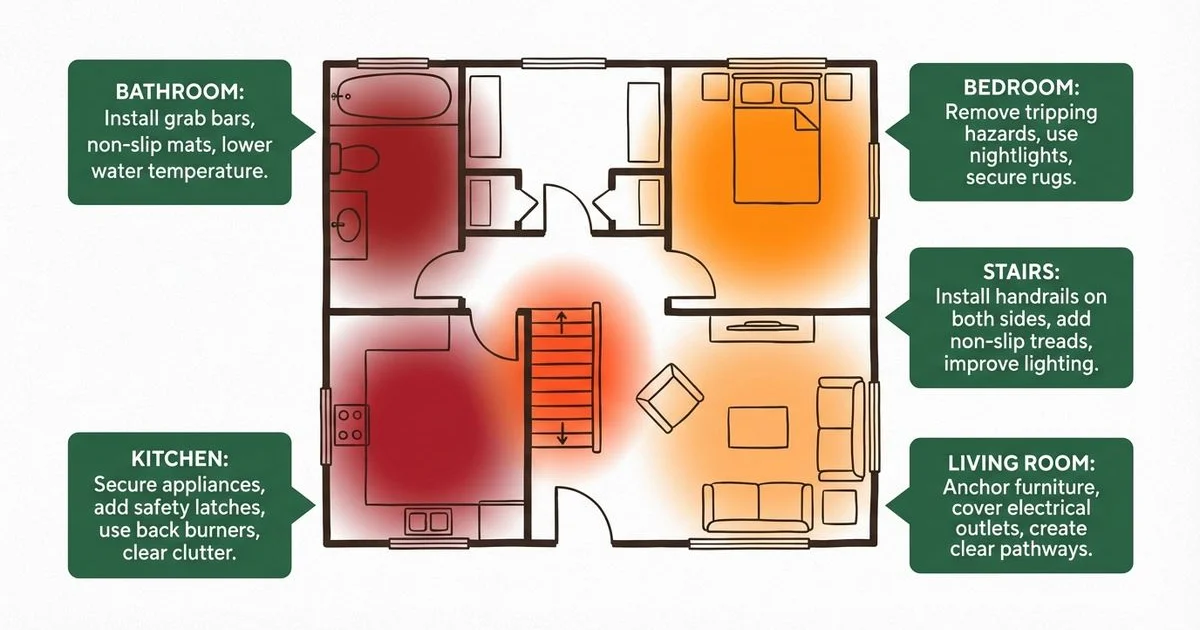
Your Home May Be Working Against You
We often view the home as a sanctuary, yet it is actually the primary site for injury among adults over 65. Our team frequently reviews data from the CDC indicating that over one in four older adults falls each year, with the majority of these incidents happening inside the house.
This isn’t just about clumsiness.
The standard American home design often creates invisible hazards for aging bodies. Research from the National Institute on Aging supports our field observations: over 60% of falls among seniors happen inside the home.
You need to know where to look.
Understanding which rooms carry the highest risk allows you to target safety investments where they matter most. This guide ranks The 5 Most Dangerous Rooms in Your Home for Seniors (and How to Fix Them), explains the specific hazards, and provides actionable modifications.
Danger Room #1: The Bathroom
Fall risk ranking: Highest Percentage of home falls: 22-26% Most common injuries: Hip fractures, head injuries, wrist fractures
The bathroom consistently ranks as the most dangerous room in our safety assessments. It concentrates multiple risk factors into a small, enclosed area.
We see a “perfect storm” of hazards here.
Hard surfaces like porcelain and tile offer zero shock absorption. Maneuvers requiring balance, such as stepping over a high tub wall or lowering onto a toilet, are necessary daily tasks.
Why the Bathroom Is So Dangerous
The physics of a bathroom fall are unforgiving. A slip on a wet surface accelerates the body quickly. The confined space means a person is likely to strike a sink, toilet, or tub rim on the way down.
Data shows the severity is high.
A fall here is two to three times more likely to result in a serious injury than a fall in a carpeted living room. Water is the primary culprit. Even a small splash creates a hydroplaning effect on tile. Furthermore, the temperature change from a hot shower can cause a sudden drop in blood pressure, leading to dizziness.
How to Fix It
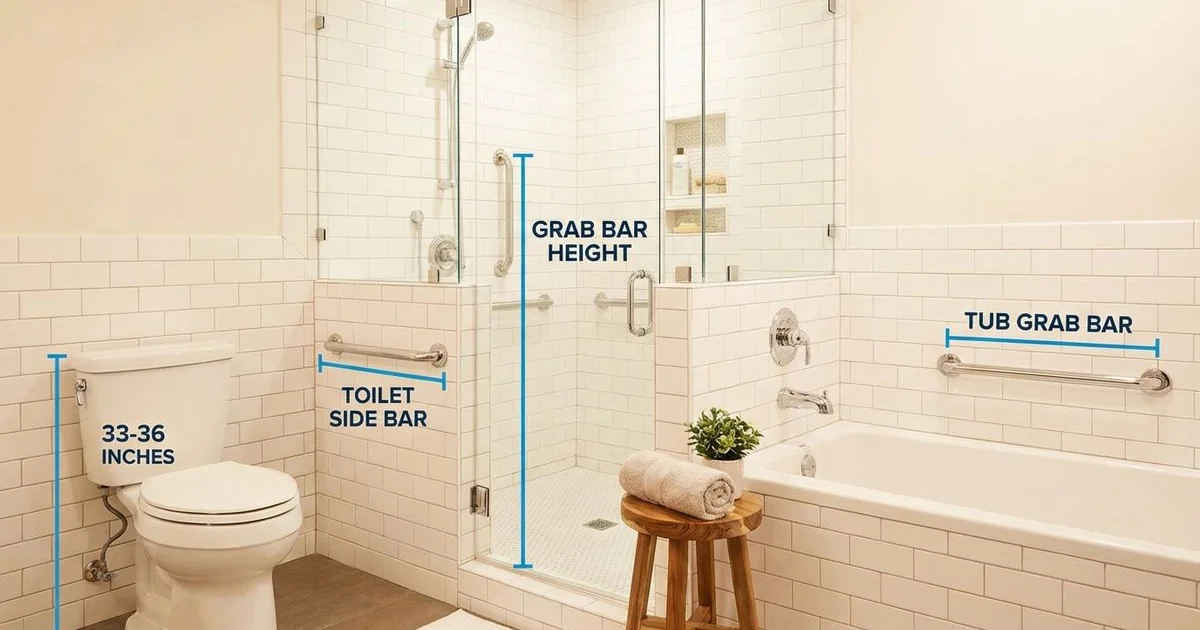
We advise against relying on “suction cup” grab bars. They can detach when you need them most. Instead, install permanent bars screwed directly into the wall studs.
Effective Bathroom Modifications
| Modification | Est. Cost (US) | Impact |
|---|---|---|
| ADA-compliant grab bars (stud-mounted) | $150 - $600 | Highest impact |
| Non-slip treatment for tubs/tiles | $20 - $100 | High impact |
| Raised toilet seat (17-19” height) | $25 - $100 | High impact |
| Shower bench or transfer seat | $30 - $300 | High impact |
| Walk-in tub or roll-in shower | $3,000 - $20,000+ | Transformative |
| High-CRI LED lighting (5000K) | $100 - $300 | Moderate impact |
| Anti-scald pressure balance valve | $50 - $200 | Safety critical |
Pro Tip: Contrast is key for visibility. If you have a white toilet on a white floor, use a colored toilet seat or a non-slip mat around the base to visually define the target area.
For a complete bathroom safety overhaul, see our 15-point senior bathroom safety checklist.
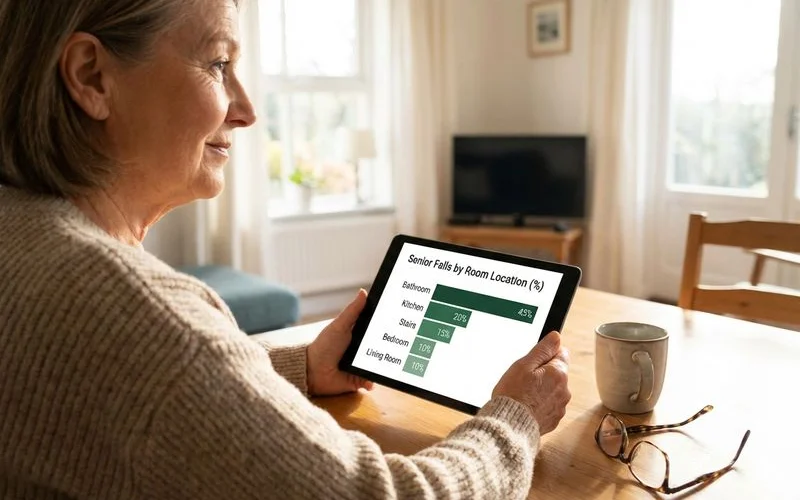 Bathroom falls account for the highest percentage of serious senior injuries at home
Danger Room #2: The Staircase
Fall risk ranking: Very high Percentage of home falls: 18-22% Most common injuries: Head injuries, spinal injuries, hip and leg fractures
Staircase falls are catastrophic. The victim often tumbles multiple steps, which builds momentum and results in repeated impacts against hard edges.
We treat every staircase as a major liability.
A fall down a full flight can generate impact forces similar to a low-speed car accident. The National Safety Council reports that thousands of fatal falls annually occur on steps.
Why Stairs Are So Dangerous
Vision changes play a massive role here. Reduced depth perception makes the edge of a carpeted step blend into the one below it. Bifocal or progressive lenses can also distort the view when looking down, causing a senior to misjudge the step location.
Muscle fatigue is another factor.
Weakened leg muscles struggle to lift the body weight repeatedly. Going down is actually riskier than going up. The body’s center of gravity shifts forward, and gravity works against you if you stumble.
How to Fix It
Lighting is often the first thing we upgrade. Most stairwells are too dim. We recommend installing light fixtures that provide at least 50 foot-candles of light at the tread level.
Essential Staircase Upgrades
| Modification | Est. Cost (US) | Impact |
|---|---|---|
| Handrails on both sides (1.25”-2” diameter) | $200 - $1,000 | Highest impact |
| Motion-activated stair lighting | $100 - $400 | High impact |
| Contrasting tape/paint on step edges | $50 - $200 | High impact |
| Non-slip stair treads (secured) | $100 - $500 | High impact |
| Stair lift installation | $2,500 - $18,000 | Transformative |
| Gate at top of stairs (dementia specific) | $30 - $100 | Situation-specific |
If stairs become a daily barrier, a mechanical solution is often safer than modification. For families evaluating their options, our stair lift buying guide covers types, costs, and features in detail.
Danger Room #3: The Kitchen
Fall risk ranking: High Percentage of home falls: 15-18% Most common injuries: Burns, cuts, hip fractures, head injuries
The kitchen is a workspace that demands physical exertion. Seniors often stand for long periods, twist to reach appliances, and carry hot or heavy items.
We see fatigue as a silent danger here.
Prolonged standing on hard linoleum or tile floors exhausts the legs and back. This reduces balance and reaction time if a slip occurs.
Why the Kitchen Is So Dangerous
Reaching hazards cause thousands of emergency room visits. Seniors climbing on unstable chairs to reach high shelves is a scenario we see too often.
Bending is equally risky.
Reaching for low cabinets can trigger orthostatic hypotension (dizziness upon standing). This is a known side effect of many blood pressure medications. Additionally, grease splatter near the stove creates invisible slick spots that water alone cannot clean.
How to Fix It
The goal is to create a “Golden Zone” for storage. Keep the most frequently used items—plates, glasses, medications—between hip and shoulder height to eliminate climbing or crouching.
Kitchen Safety Checklist
- Flooring: Place non-slip mats at the sink and stove. Look for mats with beveled edges to prevent tripping.
- Hardware: Swap round knobs for D-shaped pulls. They are easier to grip with arthritic hands.
- Appliances: Ensure the microwave is on the counter, not mounted high above the range.
- Seating: Keep a sturdy chair nearby for rest breaks during cooking.
| Modification | Est. Cost (US) | Impact |
|---|---|---|
| Reorganize storage (Golden Zone) | Free | Highest impact |
| Non-slip mats at sink/stove | $20 - $60 | High impact |
| Pull-out cabinet shelves | $50 - $200 per cabinet | High impact |
| Step stool with tall handrail | $40 - $100 | Moderate impact |
| Anti-fatigue floor mat | $30 - $80 | Moderate impact |
| Automatic stove shut-off device | $100 - $300 | Safety critical |
| Under-cabinet LED task lighting | $50 - $200 | Moderate impact |
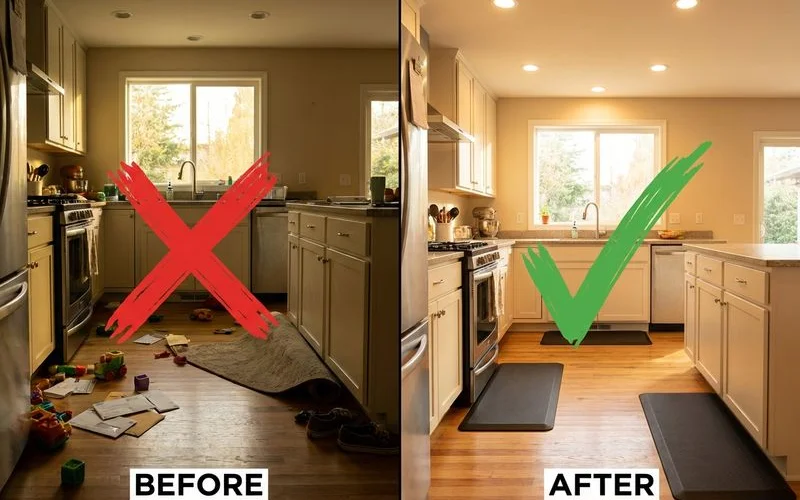 Simple changes like clearing floor clutter and adding non-slip mats transform kitchen safety
Danger Room #4: The Bedroom
Fall risk ranking: Moderate to high Percentage of home falls: 12-15% Most common injuries: Hip fractures, wrist fractures, head injuries
Bedroom falls often happen during the “zone of confusion” right after waking up. The combination of grogginess, darkness, and urgency to use the restroom creates a high-risk environment.
We emphasize the transition from sleep to wakefulness.
Blood pressure takes time to normalize after lying flat all night. Standing up too quickly can lead to a fainting spell or stumble.
Why the Bedroom Is Dangerous
Nighttime disorientation is the primary driver. A senior waking at 2 AM may not be fully alert.
Bed height is a technical detail many overlook.
A bed that is too high (requires jumping down) or too low (requires deep squat strength) is dangerous. The ideal height for most seniors is between 20 and 23 inches from the floor to the top of the mattress. This allows feet to sit flat on the floor while sitting on the edge.
How to Fix It
Lighting must be automatic. We recommend motion-sensing night lights that plug into wall outlets along the path to the bathroom. This removes the need to fumble for switches.
Bedroom Modification Plan
| Modification | Est. Cost (US) | Impact |
|---|---|---|
| Motion-activated path lighting | $20 - $60 | Highest impact |
| Touch-base bedside lamp | $15 - $50 | High impact |
| Bed rail or assist handle | $30 - $100 | High impact |
| Adjust bed height (20”-23”) | Free - $200 | High impact |
| Clear clear path to bathroom | Free | Essential |
| Remove loose rugs near bed | Free | Essential |
| Phone/medical alert at bedside | $0 - $50/month | Safety critical |
Critical Tip: Place a sturdy, non-slip mat securely on the floor where your parent steps out of bed. Seniors sleeping in socks can easily slip on smooth wood or laminate flooring the moment their feet hit the ground.
Danger Room #5: The Living Room
Fall risk ranking: Moderate Percentage of home falls: 10-14% Most common injuries: Bruises, wrist fractures, head injuries from furniture edges
The living room seems safe because it is familiar. However, the sheer amount of waking time spent here increases the statistical probability of an accident.
We look closely at the furniture.
Soft, deep sofas are comfortable but dangerous. If a seat is lower than 16 inches or too soft, a senior must rock back and forth to generate enough momentum to stand up. This momentum often leads to a loss of balance.
Why the Living Room Is Dangerous
Clutter and cords are the main enemies. Extension cords running under rugs or across walkways are major trip hazards.
Pets also contribute significantly to falls.
The CDC notes that nearly 87,000 people are treated in emergency rooms annually for falls associated with cats and dogs. Pets can lie in walkways or dart between legs unexpectedly.
How to Fix It
Create clear “highways” for walking. We recommend rearranging furniture to ensure all walkways are at least 36 inches wide to accommodate walkers or canes.
Living Room Safety Upgrades
| Modification | Est. Cost (US) | Impact |
|---|---|---|
| Remove/secure loose rugs (carpet tape) | Free - $20 | Highest impact |
| Widen furniture pathways (36”+) | Free | High impact |
| Firm chair with armrests (17”+ seat height) | $200 - $800 | High impact |
| Cord organizers/wall clips | $10 - $30 | High impact |
| Add sturdy armrests to existing seats | $50 - $300 | Moderate impact |
| Increase ambient lighting lumens | $50 - $200 | Moderate impact |
| Remove glass-topped tables | Free | Moderate impact |
The Overall Safety Picture
| Room | Fall % | Avg. Fix Cost | Top Priority Modification |
|---|---|---|---|
| Bathroom | 22-26% | $200 - $1,000 | Stud-mounted grab bars |
| Stairs | 18-22% | $300 - $1,500 | Dual handrails + lighting |
| Kitchen | 15-18% | $100 - $500 | Golden Zone storage |
| Bedroom | 12-15% | $50 - $200 | Motion-sensor lighting |
| Living Room | 10-14% | $0 - $300 | Clear pathways |
The data reveals a positive trend. The most effective safety modifications are often the most affordable. Securing a rug, installing a bright light bulb, or moving a microwave costs very little but dramatically reduces the daily risk profile.
A Systematic Approach to Home Safety
We recommend viewing the home as a complete system rather than fixing rooms in isolation. The most effective strategy is a comprehensive audit that evaluates the flow of movement from one room to another. Our DIY home safety assessment guide provides a room-by-room checklist you can use immediately.
You don’t have to do this alone.
For families seeking professional validation, a professional home safety assessment from a CAPS-certified specialist can identify subtle risks that untrained eyes miss. This provides a clear roadmap for modifications that support your parent’s independence.
The goal is continuous improvement, not immediate perfection. Start with the bathroom and stairs, then work through the remaining rooms as part of a broader fall prevention strategy. Every hazard you eliminate is a direct investment in your parent’s future safety.
Ready to Take Action?
Learn more about our comprehensive fall prevention solutions and how they can help your family.
Explore Fall Prevention About James Wilson
Home Safety Specialist & Accessibility Consultant
Certified home safety specialist with 10+ years designing accessible living spaces for seniors and individuals with mobility challenges.
Related Articles
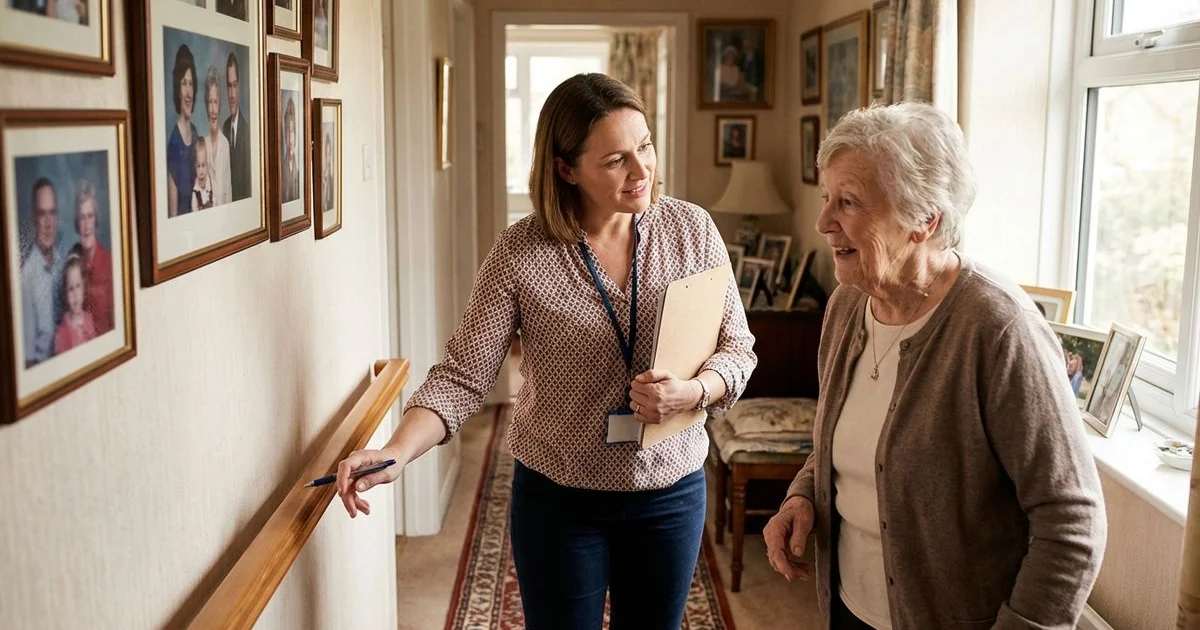
DIY Home Safety Assessment: Room-by-Room Senior Guide
Learn to conduct your own home safety assessment with our detailed room-by-room guide. Identify fall hazards, accessibility issues, and safety improvements.
Fall Prevention for Seniors: The Complete Home Safety Guide
Evidence-based fall prevention strategies for seniors covering home modifications, exercise, medication management, and environmental hazard reduction.
Where and How to Install Grab Bars: Location Guide With Diagrams
Expert guide to grab bar placement in bathrooms, hallways, and bedrooms. Includes installation heights, recommended products, and DIY vs. professional advice.