Walk-in Tub vs. Roll-in Shower: Which Is Right for Your Parent?
Side-by-side comparison of walk-in tubs and roll-in showers covering accessibility, cost, installation, and safety features for seniors.

Making the Right Choice for Your Parent’s Bathroom
We see families wrestle with this decision every single week. It is never just about choosing a fixture or picking out tile. You are trying to balance immediate safety with long-term dignity. Our team has guided hundreds of homeowners through this process. We know that the right choice depends entirely on the specific mobility challenges your parent faces today and what they might face tomorrow.
Choosing incorrectly can lead to expensive regrets. A tub that sits unused or a shower that leaks can cost thousands to fix. This guide breaks down the data and practical realities we have observed in the field.
Quick Comparison Overview
We have compiled the key performance differences to help you visualize the trade-offs.
| Feature | Walk-in Tub | Roll-in Shower |
|---|---|---|
| Price Range (Installed) | $4,000 - $20,000+ | $3,000 - $12,000 |
| Water Usage | 50 - 80+ gallons per bath | 15 - 25 gallons (10 min shower) |
| Best For | Pain management, soaking | Wheelchair users, speed, hygiene |
| Entry Threshold | 3-7 inches (Step-in) | Zero (Flush with floor) |
| Wait Time | 6-15 mins (Fill) + 2-3 mins (Drain) | Instant |
| Required Floor Space | Standard 60-inch alcove | 60-inch turning radius (for ADA) |
| Resale Value Impact | Neutral to Negative (Niche) | Positive (Universal Design) |
| Installation Time | 1-3 days | 3-5 days (Requires floor work) |
Walk-in Tubs: Benefits and Limitations
Why Families Choose Walk-in Tubs
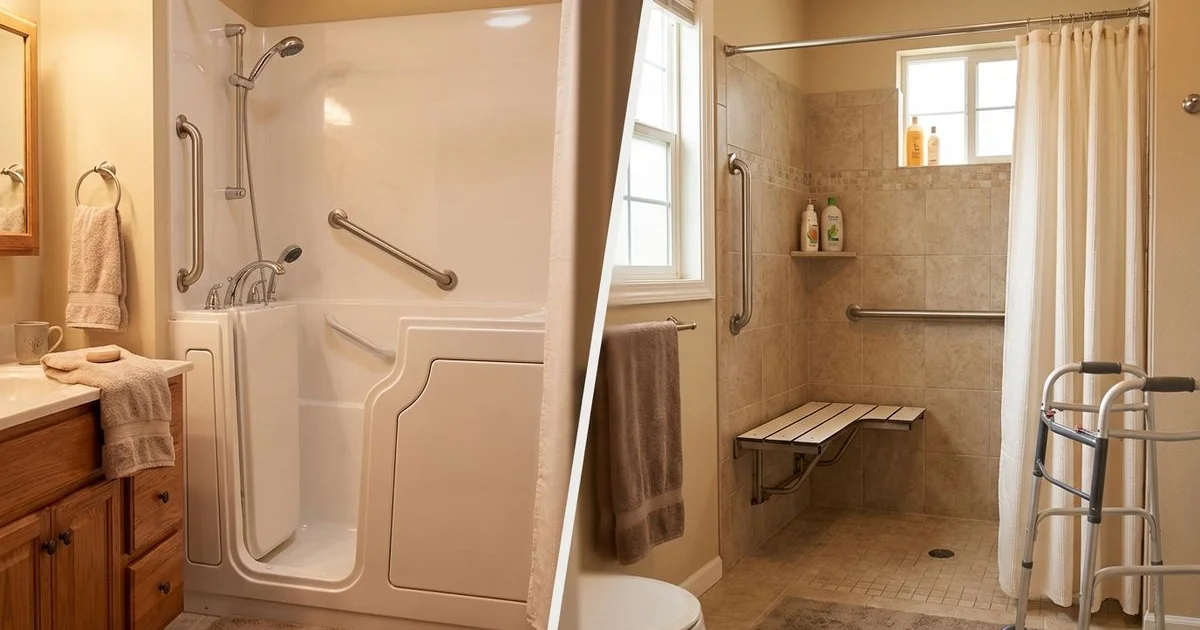
Our installers typically recommend walk-in tubs for seniors who are ambulatory but suffer from chronic pain. The defining feature is the watertight door with a low threshold of 3 to 7 inches. This design eliminates the dangerous need to balance on one foot while stepping over a standard 20-inch bathtub rim.
The therapeutic technology is the main selling point here. Hydrotherapy jets utilize water pressure to massage soreness, which we find particularly effective for clients with osteoarthritis or fibromyalgia. A 2022 study on balneotherapy confirmed that warm water immersion significantly reduces pain scores in seniors with musculoskeletal issues.
Air jet systems offer a different experience. These use warm air bubbles to create a gentle, non-aggressive massage that aids lymphatic drainage. Quality models also include inline heaters, which maintain the water temperature so the bath does not cool down during a 20-minute soak.
Walk-in Tub Limitations
The “cold wait” is the single most common complaint we hear from new owners. Your parent must enter the tub, seal the door, and sit shivering while the water rises. Even with high-flow faucets delivering 18 gallons per minute, filling a large tub takes time. They must also wait for the water to drain completely before opening the door to exit.
Water capacity is another hidden infrastructure cost. Most walk-in tubs hold between 50 and 80 gallons of water. A standard residential 40-gallon water heater cannot fill them with hot water. You will almost certainly need to upgrade to a high-capacity tank or a tankless water heater to avoid lukewarm baths.
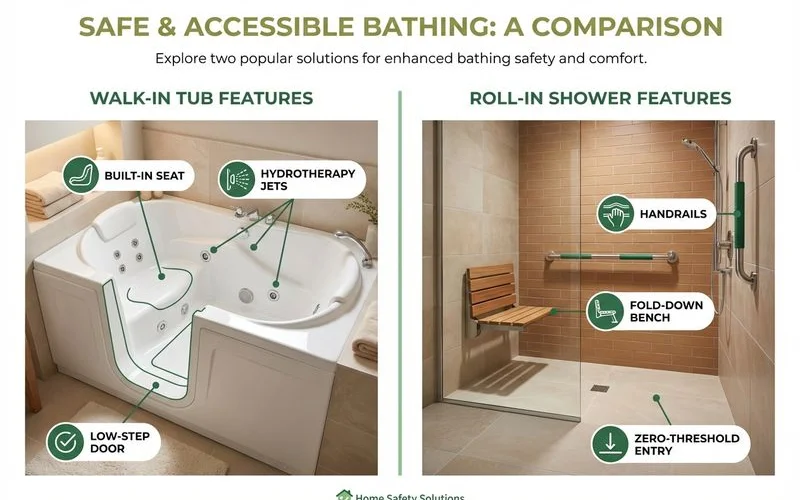 Both options offer accessibility but serve different mobility needs
Roll-in Showers: Benefits and Limitations
Why Families Choose Roll-in Showers
We advise choosing a roll-in shower, often called a “curbless” or “zero-entry” shower, for anyone using mobility aids. The floor is graded gently toward the drain, removing the barrier entirely. This allows a wheelchair or walker to roll directly into the bathing area without stopping.
Efficiency is a major factor for caregivers. A shower takes 10 to 15 minutes from start to finish. There is no filling, no draining, and no waiting. This speed is critical for seniors with incontinence issues or those who find the bathing process exhausting.
These showers also align with Universal Design standards. This architectural concept ensures spaces are usable by everyone regardless of ability. Real estate data consistently shows that modern, tile-heavy curbless showers add more resale value than walk-in tubs, which many buyers view as large medical devices.
Roll-in Shower Limitations
The primary downside is the lack of immersion. You cannot soak aching joints in a shower. While we can install thermostatic handheld sprayers and fold-down teak benches, it is not a substitute for a full soak.
Water containment requires precise installation. Our teams use linear drains and specific floor slopes (typically 1/4 inch per foot) to ensure water does not migrate into the rest of the bathroom. If the grading is even slightly off, you will have puddles on the bathroom floor.
Temperature control is also harder in an open space. Without the enclosure of a tub, seniors may feel a draft. We often install overhead heat lamps or heated flooring systems to mitigate this issue and keep the bather comfortable.
Which Mobility Needs Does Each Serve?
We use a simple litmus test to help clients decide. The choice should be dictated by your parent’s mobility limitations, not just their preference.
Choose a Walk-in Tub If Your Parent:
- Walks independently or with a cane
- Suffers from arthritis, rheumatism, or circulation problems
- Is cognitively sharp enough to manage water controls safely
- Has the patience to wait for filling and draining cycles
- Has a bathroom large enough to accommodate an outward-swinging door (if selected)
Choose a Roll-in Shower If Your Parent:
- Uses a wheelchair, scooter, or heavy-duty walker
- Requires the assistance of a caregiver to bathe
- Has a progressive condition like Parkinson’s or MS
- Experiences dizziness or has a history of fainting (syncope)
- Needs a hygienic solution that is quick and easy to clean
Pro Tip: Look at the “transfer status.” If your parent cannot stand up from a seated position without help, a walk-in tub is dangerous. If there is an emergency, getting a non-ambulatory person out of a high-walled tub is extremely difficult for EMS or caregivers. A roll-in shower is much safer for emergency access.
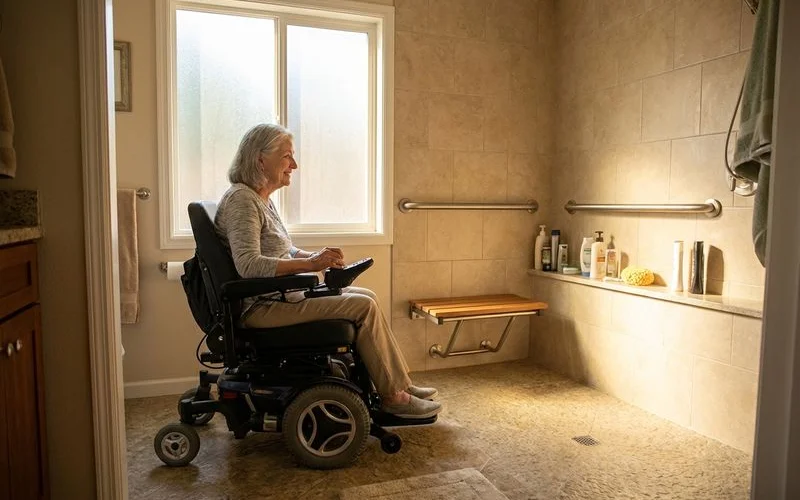 Roll-in showers provide complete wheelchair accessibility
Cost Breakdown Comparison
We believe in total transparency regarding costs. The sticker price of the unit is only half the equation.
| Cost Component | Walk-in Tub | Roll-in Shower |
|---|---|---|
| Unit / Materials | $2,500 - $15,000 | $1,500 - $6,000 |
| Installation Labor | $1,500 - $5,000 | $3,000 - $8,000 |
| Plumbing Upgrades | $500 - $2,000 | $800 - $3,000 |
| Electrical Work | $500 - $1,200 (Dedicated circuits) | $200 - $500 |
| Water Heater Upgrade | $1,500 - $3,500 (Often Required) | Usually not needed |
| Permits & Inspection | $200 - $600 | $200 - $600 |
| Total Range | $6,700 - $27,000+ | $5,700 - $18,000 |
Walk-in tubs are machinery-heavy. You are paying for pumps, heaters, seals, and specialized molds. Roll-in showers are labor-heavy. Our teams spend days grading the subfloor, waterproofing (hot mopping or membrane systems), and laying tile.
For a detailed cost breakdown of walk-in tubs specifically, see our walk-in tub cost guide.
The Hybrid Option: Walk-in Tub With Shower
We occasionally install hybrid units for households that need versatility. These systems place a shower surround and overhead fixture above a walk-in tub.
This setup allows able-bodied family members to take a quick shower while the senior uses the tub. However, be aware of the “step-over” height. Even with a door, the user must step over the threshold to stand in the shower area. If your parent drags their feet due to a shuffle gait, even a 3-inch lip can be a tripping hazard.
Making Your Decision
We recommend starting with a realistic look at the future. If your parent’s mobility is declining, the barrier-free nature of a roll-in shower is the safest long-term bet. If their mobility is stable and pain management is the priority, the walk-in tub is a superior therapeutic tool.
Start with a professional home safety assessment to verify your plumbing capacity and subfloor conditions. We can help you determine if your current water heater can handle a tub or if your floor joists need reinforcement for a shower.
Bathroom safety is an investment in independence. The cost of either modification is typically less than three months of assisted living rent. Taking action now prevents falls later.
Work with a licensed contractor who understands ADA compliance. The slope of a shower floor and the placement of grab bars must be precise to ensure safety.
Ready to Take Action?
Learn more about our comprehensive walk in tubs solutions and how they can help your family.
Explore Walk In Tubs About James Wilson
Home Safety Specialist & Accessibility Consultant
Certified home safety specialist with 10+ years designing accessible living spaces for seniors and individuals with mobility challenges.
Related Articles
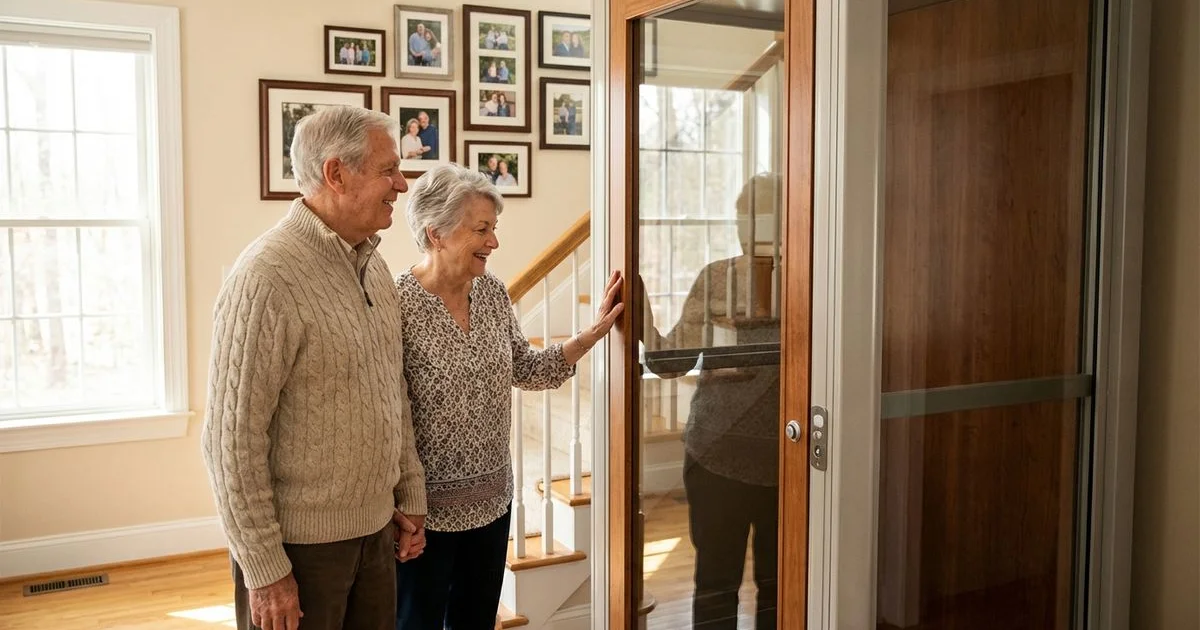
7 Alternatives to Stair Lifts for Seniors Who Need Multi-Level Access
Explore alternatives to stair lifts including home elevators, platform lifts, main-floor living conversions, and portable options for multi-level homes.
5 Evidence-Based Benefits of Hydrotherapy for Seniors
Research-backed benefits of hydrotherapy walk-in tubs for arthritis, chronic pain, and mobility issues in older adults.
The Complete Stair Lift Buying Guide: Straight vs. Curved, Costs & Features
Everything you need to know before purchasing a stair lift: types, costs, features, installation process, and top-rated brands for 2026.