Proven Fall Prevention Solutions for Safer Aging in Place
Falls are the leading cause of injury among adults over 65, but most falls are preventable with the right home modifications. Our fall prevention program includes grab bar installation, non-slip flooring, improved task lighting, threshold ramp installation, and decluttering guidance. Each modification is targeted to the specific risks identified in your home safety assessment.
What Fall Prevention Include
Understanding Why Seniors Fall and How to Prevent It
Falls are the leading cause of injury-related death among adults aged 65 and older in the United States. The Centers for Disease Control and Prevention reports that approximately 36 million falls occur among older adults each year, resulting in over 32,000 deaths and 3 million emergency department visits. These are not minor stumbles. Fall-related injuries include hip fractures, traumatic brain injuries, and other life-altering conditions that can permanently reduce independence and quality of life.
What makes these statistics particularly frustrating is that the vast majority of falls are preventable. Research consistently shows that environmental hazards in the home are a contributing factor in over 50 percent of falls among seniors. This means that by systematically identifying and addressing these hazards, families can dramatically reduce the likelihood that their loved one will experience a serious fall.
Our fall prevention program takes a comprehensive, evidence-based approach to home modification. Rather than applying generic safety tips, we build on the findings of your personalized home safety assessment to target the specific risks present in your home. Every recommendation is backed by research from the CDC, the National Council on Aging, and the National Institute on Aging.
The Five Categories of Home Fall Hazards
Understanding the categories of fall hazards helps families recognize risks they might otherwise overlook. Our assessment addresses all five categories systematically.
Surface hazards include slippery floors, loose rugs, raised thresholds between rooms, worn carpet, and wet surfaces. Bathrooms and kitchens are the highest-risk areas for surface hazards due to regular water exposure, but any floor surface that lacks adequate traction or has unexpected level changes presents a fall risk.
Lighting hazards are among the most underappreciated fall risk factors. Inadequate lighting in hallways, staircases, bathrooms, and transition areas between rooms contributes to approximately 30 percent of senior falls according to the American Geriatrics Society. Age-related changes in vision require significantly more light for safe navigation compared to younger adults.
Support hazards exist wherever a senior needs to change position, such as rising from a seated position, steadying themselves while walking, or navigating between rooms. The absence of grab bars in bathrooms, stable handrails on staircases, and support points along hallways forces seniors to rely on furniture, towel bars, or their own balance, all of which are inadequate substitutes.
Obstruction hazards include cluttered pathways, electrical cords crossing walking routes, furniture positioned in narrow passages, and items stored at floor level that must be stepped over. These hazards are particularly dangerous because they require the sudden adjustments in balance and foot placement that are most difficult for seniors.
Transition hazards occur at points where the walking surface changes, such as doorway thresholds, the junction between carpet and hard flooring, the step between a garage and living space, and the entry between indoors and outdoors. Each transition point requires a change in gait pattern that can trigger a loss of balance.
Grab Bars: The Most Effective Single Modification
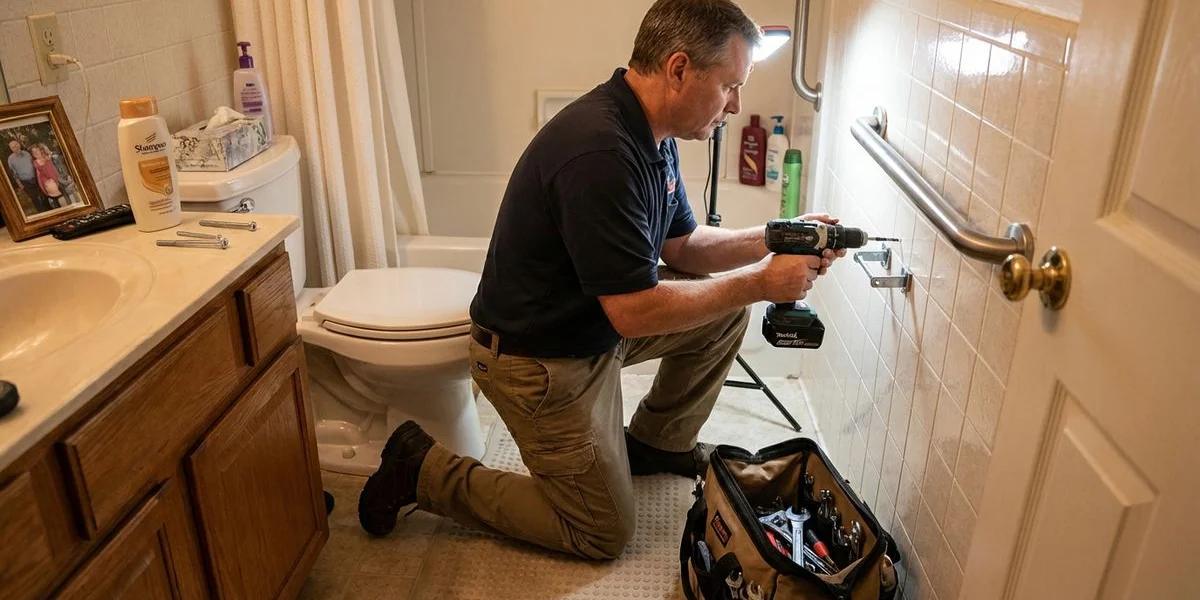
If you could make only one fall prevention improvement in a senior’s home, grab bars would deliver the greatest safety return on investment. Research published in the Journal of the American Geriatrics Society found that grab bars reduce the risk of bathroom falls by approximately 40 percent when properly installed.
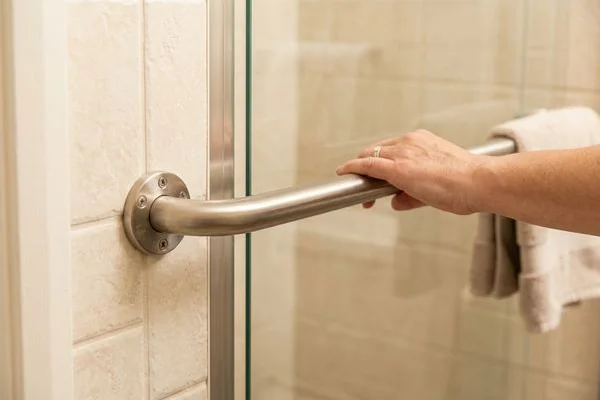
Proper placement is critical and requires professional assessment. In the bathroom, grab bars should be positioned beside the toilet for sit-to-stand transfers, inside the shower or tub for entry stability, on the shower wall for standing support, and beside the vanity for grooming activities. Each bar must be anchored into wall studs or reinforced blocking to support at least 250 pounds of force.
Material and finish selection should prioritize both function and aesthetics. Stainless steel with a brushed finish provides excellent grip even when wet. Textured surfaces and flanged ends prevent hand slipping. Modern grab bars are available in designer finishes that complement bathroom decor, eliminating the institutional appearance associated with older models.
Strategic positioning beyond the bathroom extends the safety network throughout the home. Hallway grab bars provide stability during longer walks between rooms. Bedside grab bars assist with safe bed transfers. Entry grab bars support balance during the shoe removal and coat management tasks that often precipitate falls.
Installation Fact: A professionally installed grab bar costs $100 to $300 including hardware and labor. The average cost of a fall-related hip fracture, including surgery and rehabilitation, exceeds $35,000. The return on investment for grab bar installation is extraordinary.
Lighting Modifications That Dramatically Reduce Risk
Aging eyes need significantly more light to function safely. A 60-year-old requires three times more light than a 20-year-old to see with the same clarity, and this ratio increases further with each passing decade. Strategic lighting improvements address this physiological reality.
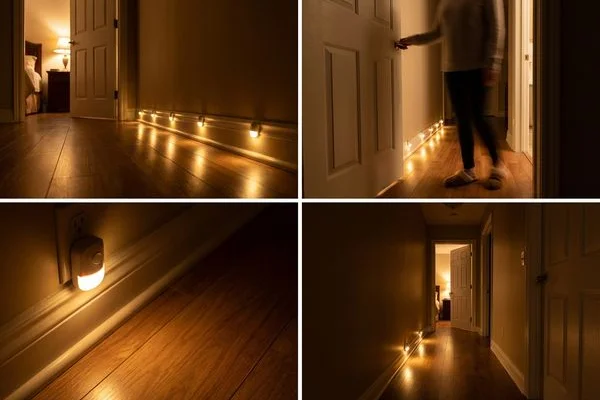
Motion-activated night lights along the bedroom-to-bathroom pathway eliminate the most dangerous nighttime navigation scenario. Quality LED night lights provide enough illumination for safe walking without being bright enough to disrupt sleep. Plug-in models require no installation, while hardwired models offer cleaner aesthetics.
Task lighting upgrades in kitchens, bathrooms, and work areas ensure adequate illumination for activities that require visual precision. Under-cabinet kitchen lights, vanity mirror lights with magnification, and adjustable reading lamps all contribute to safer daily functioning.
Staircase lighting is particularly critical. Illuminated stair edges, known as stair nose lighting, make each step clearly visible. Light switches at both the top and bottom of every staircase prevent the dangerous practice of navigating stairs in the dark to reach a switch.
Entryway and exterior lighting ensures safe transitions between indoor and outdoor environments. Motion-activated porch lights, illuminated walkways, and well-lit garage entries reduce fall risk during the vulnerable moments of arriving and departing from the home.
Non-Slip Flooring and Surface Solutions
Slippery floor surfaces are directly responsible for a significant percentage of home falls among seniors. Modern flooring solutions provide excellent traction without sacrificing appearance.
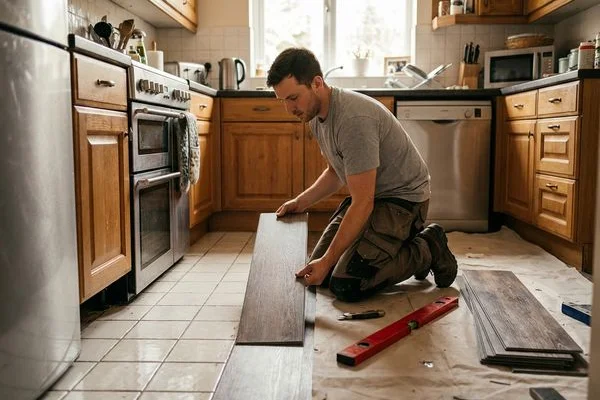
Luxury vinyl plank flooring has emerged as one of the best options for senior homes. It provides excellent slip resistance, cushioned comfort underfoot, easy maintenance, and the warm appearance of hardwood without the slippery surface. Many luxury vinyl products carry specific slip-resistance ratings that meet or exceed safety standards.
Anti-slip treatments can be applied to existing tile, stone, and porcelain surfaces without replacing the flooring. These treatments create a microscopic texture on the surface that increases traction when wet, effectively transforming a slippery floor into a safe one. The treatments are invisible and do not change the appearance of the floor.
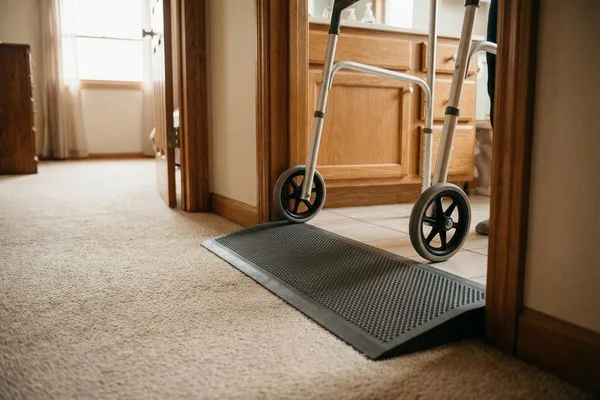
Transition strips and threshold ramps address the level changes between different flooring materials. A smooth, gradual transition between carpet and tile, or between a slightly raised room and a hallway, eliminates the sudden elevation change that catches a shuffling gait.
Building a Complete Fall Prevention Strategy
The most effective fall prevention approaches combine environmental modifications with behavioral strategies and ongoing monitoring.
Environmental modifications form the foundation and include all the physical changes discussed above, such as grab bars, lighting, flooring, and obstacle removal. These modifications create a permanently safer living environment that protects your loved one every hour of every day.
Behavioral strategies complement environmental changes. These include wearing proper footwear with non-slip soles indoors, using prescribed mobility aids consistently, taking medications as directed to manage conditions that affect balance, and maintaining regular physical activity to preserve strength and coordination.
Technology integration adds an additional layer of protection. Fall detection wearables can automatically alert family members or emergency services if a fall occurs. Motion sensor systems can detect unusual patterns that might indicate increased fall risk. Smart home lighting can be programmed to activate automatically based on time of day and movement patterns.
Regular reassessment ensures that the fall prevention strategy evolves as needs change. We recommend reassessment every six to twelve months or whenever there is a change in mobility, medication, or health status. What was adequate six months ago may need enhancement as conditions progress.
Taking action on fall prevention is one of the most impactful decisions a family can make for a senior loved one. Every fall prevented avoids pain, hospital visits, rehabilitation, and the potential loss of independence that too often follows a serious injury. Contact us today to schedule your free home safety assessment and begin building a comprehensive fall prevention plan for your family.
Fall Prevention Pricing Options
One-time investments that cost a fraction of annual facility care.
Essential Safety Package
- Bathroom grab bars (2-3 locations)
- Motion-activated night lights
- Loose rug removal or securing
Standard Prevention Package
- All Essential features included
- Non-slip flooring in bathroom
- Improved task lighting
- Threshold ramps (up to 3)
- Handrail upgrades
Comprehensive Whole-Home
- All Standard features included
- Full-home non-slip flooring
- Smart motion-activated lighting
- Staircase safety upgrades
- Exterior pathway improvements
Why Families Choose Our Fall Prevention
Evidence-Based Approach
Our fall prevention recommendations are based on CDC research and National Council on Aging guidelines, not generic checklists. Every modification is selected for its proven impact on fall reduction.
Up to 60% Fall Reduction
Research published by the National Institute on Aging shows that comprehensive home modifications reduce fall-related injuries by up to 60 percent in homes where they are implemented.
Phased Budget Planning
Not every family can afford all modifications at once. Our phased plans prioritize the highest-impact changes first, allowing you to improve safety incrementally as budget permits.
Code-Compliant Installation
Every modification meets or exceeds local building codes and ADA accessibility guidelines. Grab bars are load-tested, lighting meets lumen requirements, and flooring meets slip-resistance ratings.
Whole-Home Integration
Rather than addressing isolated hazards, our approach considers how you move through your entire home, creating safe pathways from bedroom to bathroom, kitchen to living room, and inside to outside.
Post-Installation Support
We follow up 30 days after installation to verify that all modifications are being used correctly and to address any adjustments needed based on the user's experience.
How Fall Prevention Work
Risk Identification
Building on your home safety assessment, we identify the specific fall risks in your home and classify each by severity, from immediate hazards to longer-term improvement opportunities.
Modification Plan
Your specialist creates a phased modification plan organized by priority and budget, showing exactly which improvements deliver the greatest safety impact at each price point.
Professional Installation
Certified contractors install all modifications to code, ensuring grab bars are anchored into studs, lighting meets safety standards, and flooring transitions are smooth and compliant.
Verification Walkthrough
After installation, your specialist verifies every modification with the primary user, demonstrating proper use and confirming that each improvement functions as intended.
Save $50,000+ Per Year With Home Safety Modifications
A one-time investment in fall prevention costs a fraction of annual assisted living fees. Get a free assessment to see your potential savings.
Get a Free AssessmentSee Our Work
What Families Say About Fall Prevention
"The cost comparison tool opened our eyes, but it was the fall prevention modifications that truly changed our lives. After installing grab bars, better lighting, and removing trip hazards, Dad has not had a single fall in over a year. The phased approach let us stay within budget."
"My mother fell twice last year and each hospital visit cost thousands. The entire fall prevention modification package for her home was less than one emergency room trip. The non-slip flooring in her kitchen and bathroom looks beautiful and gives us peace of mind."
"We had no idea how many hazards were hiding in plain sight. The specialist found raised thresholds, loose carpet, inadequate lighting, and missing grab bars in multiple rooms. After the modifications, Mom moves through her home with so much more confidence."
Common Questions About Fall Prevention
What are the most common fall hazards in a senior's home?
How much do fall prevention modifications cost?
Are grab bars only for bathrooms?
Will non-slip flooring look institutional or unattractive?
How effective is improved lighting at preventing falls?
Can fall prevention modifications help someone who uses a walker or wheelchair?
Do insurance programs cover fall prevention modifications?
How quickly can modifications be installed?
Related Home Safety Solutions
Bathroom Access
Complete bathroom and entryway transformations including curbless showers, wider doorways, and zero-step entries.
Learn More →Safety Assessments
Room-by-room safety assessments identifying fall risks, accessibility barriers, and recommended modifications.
Learn More →Walk-in Tubs
Low-threshold entry tubs with anti-slip flooring and hydrotherapy features designed for safe, independent bathing.
Learn More →Try Our Free Cost Calculator
Compare the cost of home modifications versus assisted living to see how much your family can save.
Use Cost CalculatorGet Your Free Fall Prevention Assessment
Take the first step toward a safer home. Our certified specialists help you understand your options, estimated costs, and potential savings versus facility care.
Get a Free Assessment