Custom Ramps and Outdoor Accessibility for Safe Aging in Place
Safe entry and exit from the home is fundamental to independent living. We provide resources and referrals for wheelchair ramp installation, portable ramp solutions, porch lifts, and outdoor pathway improvements. Custom installations ensure the right solution for your home's specific layout and the individual's mobility needs.
What Ramps Include
Why Home Entry Access Is Fundamental to Independence
The ability to safely enter and exit your own home is so basic to daily life that most people take it for granted. But for millions of seniors and individuals with mobility challenges, the steps leading to their front door, back door, or garage entry become the most significant barrier to maintaining their independence.
Consider the daily scenarios that require navigating home entry points: retrieving the mail, attending medical appointments, grocery shopping, visiting friends or family, gardening, and simply enjoying time outdoors. When entry steps become hazardous or impassable, each of these ordinary activities requires assistance, planning, or is abandoned entirely. The resulting confinement and loss of autonomy can be as damaging to quality of life as the mobility limitation itself.
For families evaluating aging-in-place feasibility, entry accessibility is often the determining factor. A senior who can safely manage their bathroom and navigate their interior living space may still face facility placement conversations if they cannot safely get in and out of the house. Ramp installations and outdoor accessibility modifications solve this critical last-mile problem, keeping the option of independent living viable.
Understanding Ramp Types and Their Applications
The right ramp solution depends on the specific elevation change, available space, property layout, and whether the need is temporary or permanent. Understanding the options helps families make informed decisions.
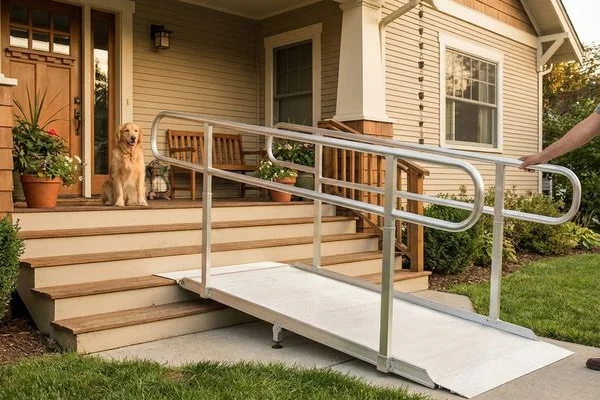
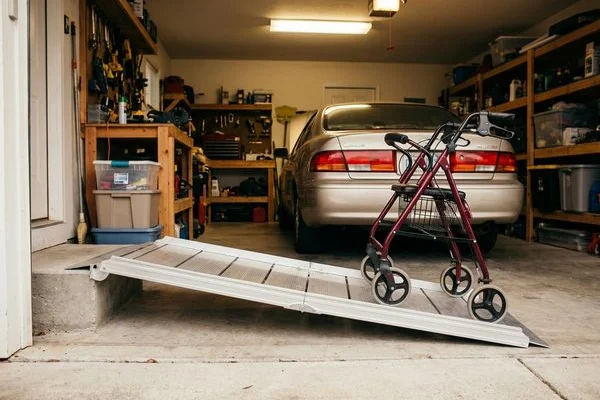
Portable folding ramps are lightweight aluminum devices that unfold to bridge small elevation changes of one to three steps. They require no installation, can be stored when not in use, and are ideal for temporary situations such as post-surgery recovery. Most portable ramps support 600 pounds or more and feature non-slip surfaces. Prices range from $100 to $500 depending on length and weight capacity.
Threshold ramps are small wedge-shaped devices designed to bridge the raised lip of a doorway threshold. These one-inch to three-inch ramps eliminate the trip hazard of stepping over a door threshold and allow wheeled devices to pass smoothly. They are typically made from rubber or aluminum and can be installed in minutes with adhesive or screws.
Modular aluminum ramp systems are assembled from prefabricated sections including ramp runs, landings, and turns. These systems can be configured to navigate complex approaches including L-shapes, U-turns, and switchbacks. Because they are bolted together rather than permanently constructed, modular ramps can be reconfigured, extended, or removed without damage to the home. Installation typically takes one day for standard configurations.
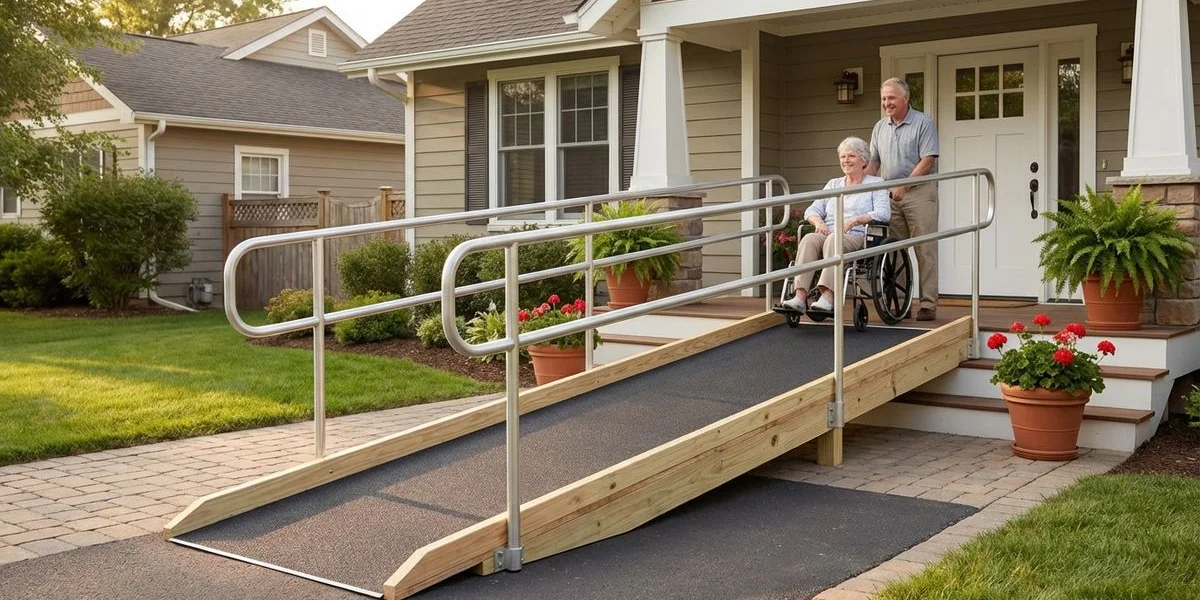
Custom-built permanent ramps are constructed on-site from wood, concrete, or composite materials. They offer the highest degree of design customization and can be built to match the home’s existing architectural style. Permanent ramps are the best choice for long-term installations where aesthetics and integration with the property design are priorities.
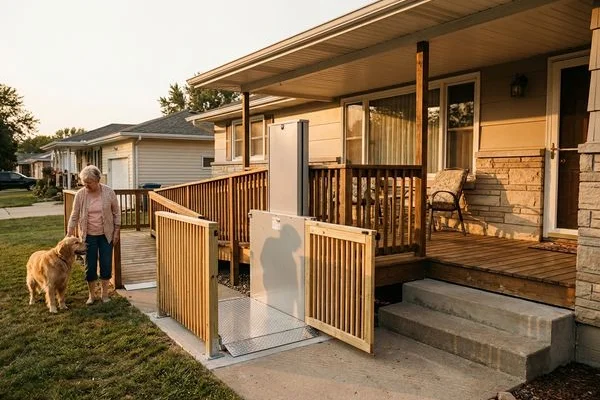
Porch lifts provide vertical access when horizontal ramp space is insufficient. These mechanical platforms raise and lower users between ground level and porch or deck height. Porch lifts are enclosed with safety gates and require a 20-amp electrical circuit. They are the preferred solution when the elevation change exceeds 30 inches or when lot constraints prevent a ramp of adequate length.
ADA Slope Requirements and What They Mean for Your Home
The Americans with Disabilities Act establishes clear standards for ramp slope that ensure safe, independent navigation for wheelchair users and individuals with limited strength or endurance. Understanding these requirements is essential for proper ramp planning.
The 1:12 rule is the foundation of ADA ramp design. For every one inch of vertical rise, the ramp must extend at least twelve inches horizontally. This means a home with a front porch that sits 24 inches above ground level requires a minimum ramp length of 24 feet, not including the required landings at the top and bottom.
Landing requirements specify that flat platforms must be provided at the top and bottom of every ramp run, and at any point where the ramp changes direction. Landings must be at least 60 inches long and at least as wide as the ramp itself. These platforms provide resting points and safe transition areas for changing direction.
Maximum continuous run between landings is 30 feet. Longer ramps must include intermediate landings. This prevents fatigue and provides rest stops for individuals who self-propel their wheelchairs or walk with assistive devices.
Handrail requirements specify rails on both sides of any ramp with a rise greater than six inches or a horizontal run greater than 72 inches. Handrails must be between 34 and 38 inches high, extend 12 inches beyond the top and bottom of the ramp, and be graspable with a cross-section diameter between 1.25 and 2 inches.
Planning Note: A 36-inch rise at 1:12 slope requires a 36-foot ramp run. On a typical residential lot, this often necessitates a switchback design with one or two direction changes. Our site evaluation determines the most efficient layout for your specific property.
Outdoor Pathway Safety Beyond the Ramp
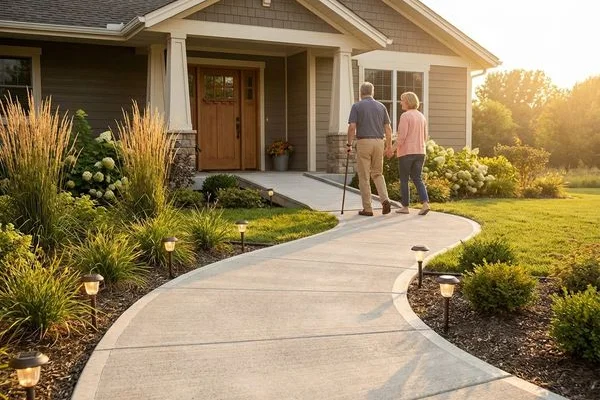
Comprehensive outdoor accessibility extends beyond the ramp itself to include the entire pathway from the home’s entry to the sidewalk, driveway, or vehicle access point.
Walkway surface condition is the first consideration. Cracked, heaved, or uneven concrete creates trip hazards that are especially dangerous for seniors using walkers or canes. Resurfacing, grinding, or replacing damaged walkway sections creates a smooth, predictable surface for safe navigation.
Non-slip surface treatments can be applied to existing concrete, stone, and masonry surfaces to dramatically improve traction, particularly when wet. These treatments create a microscopic texture that provides grip without changing the appearance of the surface. For new installations, textured concrete finishes and aggregate surfaces provide built-in traction.
Outdoor lighting is essential for safe entry and exit during evening hours and early morning. Motion-activated lights at the ramp, along walkways, and at the door entry illuminate the path when needed without requiring the senior to find and operate light switches. Solar-powered pathway lights provide additional visibility along longer approaches.
Drainage improvements prevent water from pooling on walkways and ramp surfaces. Proper grading directs water away from walking paths. French drains or channel drains collect water at low points. These improvements reduce both slip hazards and the freeze-thaw damage that deteriorates outdoor surfaces over time.
Handrails along pathways provide support for ambulatory seniors who do not need a ramp but benefit from having something to hold while walking on outdoor surfaces. Freestanding pathway handrails can be installed along any walkway section and are particularly valuable on slight slopes or uneven surfaces.
Choosing Between a Ramp and a Porch Lift
The decision between installing a ramp and installing a porch lift depends on several practical factors specific to your property and your loved one’s needs.
Choose a ramp when your property has sufficient horizontal space to accommodate the required slope, the elevation change is 30 inches or less, the user prefers rolling over a mechanical device, budget is a primary concern, and the installation should require no electrical work or ongoing power consumption.
Choose a porch lift when the property lacks space for an ADA-compliant ramp length, the elevation change exceeds 30 inches, multiple wheelchair users in the household need access, the ramp would extend into driveways or public walkways, or visual impact is a strong consideration since porch lifts have a smaller footprint.
Cost comparison favors ramps at lower elevation changes and porch lifts at higher ones. For a 24-inch rise, a modular ramp costs approximately $3,000 to $5,000 while a porch lift costs $4,000 to $7,000. But for a 48-inch rise, the ramp length required would be 48 feet with switchbacks, potentially costing $8,000 to $12,000, while a porch lift for the same height costs the same $4,000 to $7,000.
Maintaining Your Outdoor Accessibility Investment
Proper maintenance ensures that your ramp, lift, or pathway modifications continue to function safely for years to come.
Aluminum ramp maintenance is minimal. Periodic cleaning with mild soap and water removes debris and maintains the non-slip surface texture. Check all bolts and connections annually for tightness. Inspect handrails for stability and surface grip. Aluminum does not rust, rot, or require painting, making it one of the lowest-maintenance ramp materials available.
Wood ramp maintenance requires annual inspection for rot, warping, and insect damage. Pressure-treated lumber should be re-sealed every two to three years. Non-slip surface strips should be replaced when worn. Handrails should be checked for splinters and loose connections.
Concrete ramp maintenance includes filling any cracks that develop, re-applying non-slip surface treatment as recommended by the product manufacturer, and ensuring that drainage remains adequate to prevent water pooling and freeze-thaw damage.
Porch lift maintenance follows the manufacturer’s service schedule, typically including annual lubrication, electrical connection inspection, battery testing if applicable, and safety gate operation verification. Most porch lift manufacturers offer service agreements that cover routine maintenance.
Whether you need a simple portable ramp to bridge a single step or a comprehensive outdoor accessibility system including a custom ramp, pathway improvements, and lighting, our mobility specialists can evaluate your property and recommend the most effective, attractive, and cost-efficient solution. Contact us today for a free site evaluation and take the first step toward restoring complete home access for your loved one.
Ramps Pricing Options
One-time investments that cost a fraction of annual facility care.
Portable Ramp Solution
- Folding aluminum ramp
- Supports up to 600 lbs
- No installation required
Modular Ramp System
- Prefabricated aluminum sections
- Non-slip surface treatment
- Dual handrails included
- Reconfigurable and removable
Custom Permanent Ramp
- Built to match home architecture
- ADA-compliant slope and landings
- Weather-resistant materials
- Non-slip surface treatment
- Building permit handled
Why Families Choose Our Ramps
ADA-Compliant Design
Every ramp installation meets ADA slope requirements of no more than 1:12 ratio, meaning one inch of rise per twelve inches of run. This ensures the ramp is safely navigable for wheelchair users and those with limited strength.
Multiple Solution Options
From permanent concrete ramps to modular aluminum systems to portable folding ramps, we evaluate your specific situation and recommend the solution that best balances function, appearance, budget, and potential future needs.
Weather-Resistant Materials
All outdoor installations use materials rated for your climate, including corrosion-resistant aluminum, pressure-treated lumber, or reinforced concrete with non-slip surface treatments that maintain traction in rain, snow, and ice.
Preserves Curb Appeal
Modern ramp designs can complement your home's architecture. Options include wood ramps that match existing deck materials, aluminum ramps with decorative panels, and landscaping integration that blends the ramp into your property's natural design.
Rapid Installation
Modular aluminum ramp systems can be installed in as little as one day. Even custom permanent ramps typically take only two to three days from start to finish, minimizing disruption to your daily routine.
How Ramps Work
Site Evaluation
A mobility specialist visits your home to measure entry points, evaluate elevation changes, assess soil and foundation conditions, and determine the optimal ramp or lift configuration for your property.
Solution Design
Based on the evaluation, we recommend the best approach whether it is a permanent ramp, modular system, portable ramp, or porch lift, considering ADA slope requirements, available space, and aesthetic preferences.
Permit and Installation
Our contractors handle any required building permits and complete the installation to code. Ramps are built with proper slope, non-slip surfaces, and sturdy handrails. Porch lifts include electrical connections and safety features.
Safety Certification
After installation, your specialist verifies that the ramp meets ADA slope requirements, handrails are secure, surfaces provide adequate traction, and the user can navigate the system safely and confidently.
Save $50,000+ Per Year With Home Safety Modifications
A one-time investment in ramps costs a fraction of annual assisted living fees. Get a free assessment to see your potential savings.
Get a Free AssessmentSee Our Work
What Families Say About Ramps
"After my knee replacement, I could not manage the three steps to our front door. The modular ramp was installed in a single day and it looks like it was always part of the house. The aluminum is maintenance-free and the non-slip surface works perfectly even in the rain."
"We needed a ramp for my husband's wheelchair but our small lot did not have room for the length required. The porch lift was the perfect solution. It takes him straight up to the porch level in about fifteen seconds. The safety features give us confidence every time he uses it."
"The custom wood ramp matches our deck perfectly. Neighbors have commented on how good it looks. More importantly, Mom can now come and go freely with her walker instead of being nervous about the front steps every time she leaves the house. It has restored her independence."
Common Questions About Ramps
What is the ADA-required slope for a wheelchair ramp?
How much does a wheelchair ramp cost?
Do I need a building permit for a ramp?
What is the difference between a modular ramp and a permanent ramp?
When is a porch lift a better option than a ramp?
Can ramps be installed on rental properties?
How do you ensure ramp safety in winter weather?
Can a ramp be designed to match my home's exterior?
Related Home Safety Solutions
Fall Prevention
Expert-recommended modifications including grab bars, improved lighting, and non-slip surfaces to prevent falls.
Learn More →Safety Assessments
Room-by-room safety assessments identifying fall risks, accessibility barriers, and recommended modifications.
Learn More →Stair Lifts
Reliable stair assistance with battery backup and custom fit to restore full home access.
Learn More →Get Your Free Ramps Assessment
Take the first step toward a safer home. Our certified specialists help you understand your options, estimated costs, and potential savings versus facility care.
Get a Free Assessment