Smart Monitoring Solutions for Safe, Independent Aging in Place
Modern smart home monitoring technology provides families with peace of mind without compromising a senior's dignity or independence. Solutions include motion sensors that detect unusual inactivity, fall detection wearables, medication dispensers with reminders, smart doorbells and locks, and activity monitoring dashboards for family members. These systems serve as an early warning network that can delay or prevent facility placement.
What Smart Monitoring Include
The Role of Technology in Modern Aging in Place
Technology has fundamentally changed what is possible for seniors who want to continue living independently at home. Where families once faced a binary choice between leaving a loved one completely unsupervised or moving them into a staffed facility, smart home monitoring now provides a middle path that preserves independence while offering meaningful safety oversight.
The concept is straightforward: a network of non-intrusive sensors and wearable devices creates a digital safety net around your loved one’s daily routine. These devices passively monitor activity patterns, detect potential emergencies like falls, manage medication schedules, and provide family members with real-time visibility into their parent’s wellbeing, all without cameras, recording devices, or anything that compromises the senior’s sense of privacy and autonomy.
For the estimated 90 percent of seniors who express a strong preference to age in their own home, smart monitoring technology can be the enabling factor that makes this preference a safe, sustainable reality. And for their adult children, often living in different cities or states, these systems provide the reassurance needed to support their parent’s wish to remain at home.
Activity Monitoring: Understanding Daily Patterns
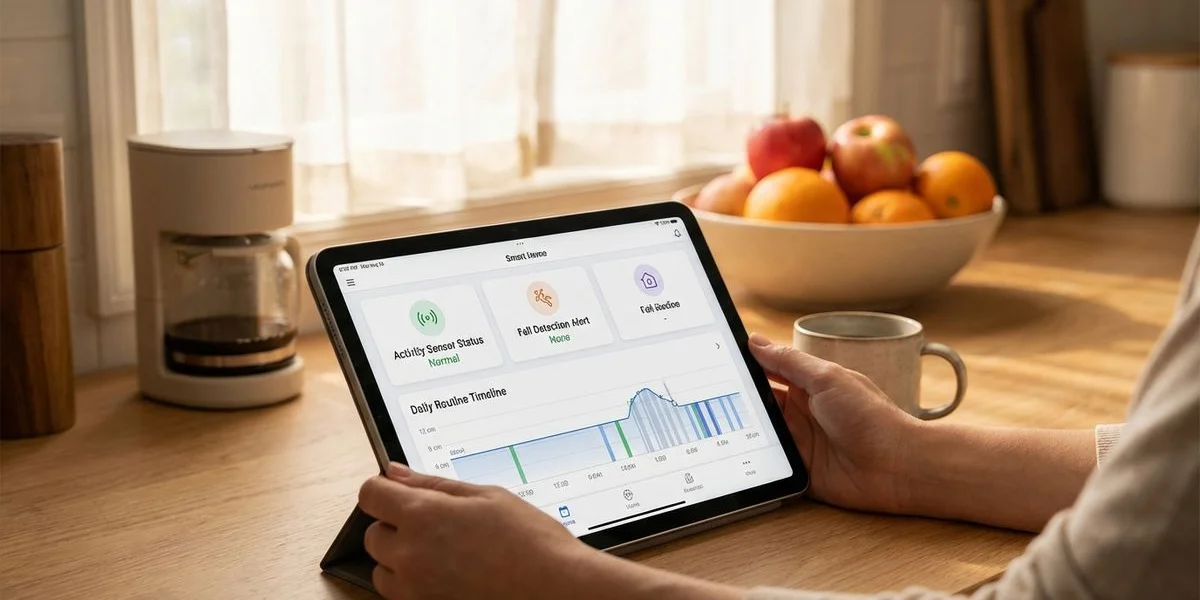
The foundation of effective smart home monitoring is activity pattern recognition. Rather than simply detecting emergencies after they happen, advanced monitoring systems learn your loved one’s normal daily routine and alert you when something appears different.
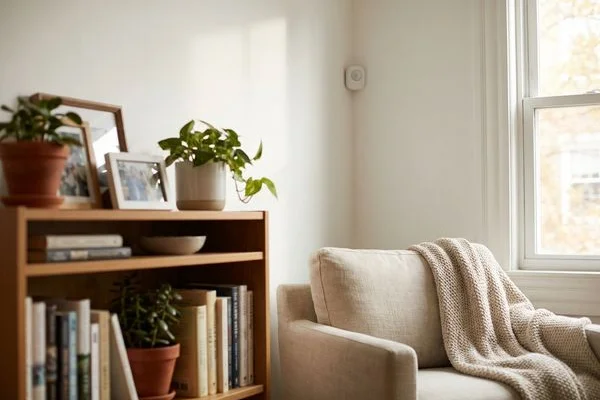
How pattern recognition works: Motion sensors placed in key rooms throughout the home, including the bedroom, bathroom, kitchen, and living areas, track movement throughout the day. Over the first two to four weeks, the system builds a baseline profile of normal activity. This might include waking at 7 AM, moving to the bathroom, spending time in the kitchen during breakfast, sitting in the living room during the afternoon, and following a predictable nighttime routine.
What triggers an alert: Once the baseline is established, the system identifies meaningful deviations. If your parent typically enters the kitchen for breakfast by 8:30 AM but has not done so by 10 AM, you receive a notification. If nighttime bathroom visits increase significantly from the baseline, this could indicate a urinary tract infection or other medical change. If afternoon activity drops notably from the established pattern, this might suggest depression, fatigue, or declining health.
Why this matters more than emergency response: While fall detection and emergency alerts are critically important, the real power of pattern monitoring lies in early detection of gradual changes. A slow decline in daily activity often precedes a health crisis by days or weeks. By identifying these trends early, families can arrange medical attention, increase social engagement, or adjust care plans proactively rather than reactively.
Fall Detection Technology: Accuracy and Reliability
Fall detection has matured significantly from the early days of simple pendant-style medical alert buttons that required the wearer to manually activate them during an emergency. Modern fall detection uses sophisticated accelerometer and gyroscope technology combined with machine learning algorithms to automatically detect falls without any action from the wearer.
How automatic fall detection works: Wearable devices continuously measure acceleration, rotation, and altitude changes. When the algorithms detect a pattern consistent with a fall event, specifically the rapid downward acceleration followed by a sudden stop and horizontal orientation that characterizes a fall, the device triggers an alert sequence.
Reducing false positives: Early fall detection systems were plagued by false alarms triggered by normal activities like sitting down quickly, bending to pick up an object, or lying down on a bed. Modern systems use machine learning trained on thousands of real and simulated fall events to distinguish between actual falls and normal daily movements with accuracy rates exceeding 95 percent in clinical studies.
Automatic versus manual alerts: The best systems combine both capabilities. If the device detects a fall, it initiates an automatic alert with a brief countdown period during which the wearer can cancel the alert if they are fine. Simultaneously, the wearer can always press a button to manually trigger an alert for any emergency, whether or not a fall is detected.
Response chain: When an alert is triggered, the notification sequence begins immediately. Family members receive push notifications, text messages, and phone calls in rapid succession. If professional monitoring is included, a trained operator contacts the senior via the wearable speaker, assesses the situation, and dispatches emergency services if needed.
Technology Insight: The latest generation of fall detection wearables are designed to look like ordinary smartwatches, eliminating the stigma associated with medical alert devices. Many seniors who refused to wear a traditional pendant readily accept a device that resembles the same smartwatch their grandchildren wear.
Medication Management Systems
Medication non-adherence is one of the most common and dangerous challenges facing seniors living independently. The National Council on Aging estimates that medication non-adherence causes 125,000 deaths and 10 percent of hospitalizations among older adults annually. For families, the inability to ensure proper medication management is frequently a deciding factor in considering facility placement.
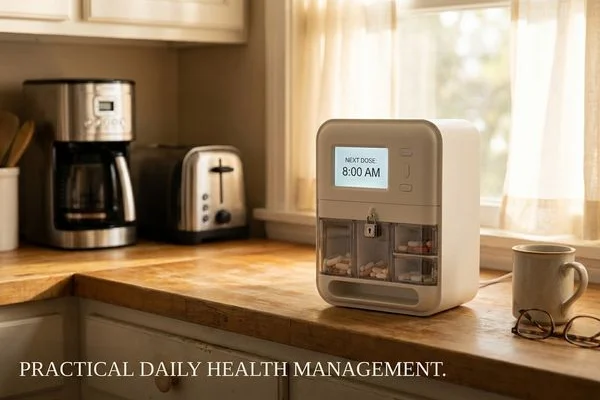
Automatic medication dispensers address this challenge comprehensively. These devices are pre-loaded with up to 30 days of medications, organized by dose time. At each scheduled time, the dispenser rotates to present the correct pills, activates audible and visual alerts, and unlocks the compartment for the appropriate dose only. Between doses, all medications remain locked and inaccessible, preventing accidental double-dosing.
Multi-level reminder escalation ensures that missed doses do not go unnoticed. The typical sequence begins with the dispenser’s own audio alert. If the dose is not retrieved within a set window, a second louder reminder sounds. If still not taken, the family dashboard records the missed dose and sends notifications to designated family members. This escalating sequence dramatically improves adherence rates compared to simple pill organizers.
Tracking and reporting capabilities provide families and healthcare providers with detailed medication adherence data. Monthly reports show which doses were taken on time, which were late, and which were missed entirely. This data is valuable during doctor visits and can reveal patterns that suggest confusion, forgetfulness, or intentional non-compliance that need to be addressed.
Smart Home Integration for Daily Safety
Beyond dedicated monitoring sensors, a range of smart home devices can be integrated into a comprehensive safety ecosystem for senior living.
Smart locks allow family members to grant temporary access to caregivers, delivery personnel, or emergency responders without requiring the senior to physically answer the door. Activity logs show who entered and when, providing accountability and security.
Smart doorbells with video capability let the senior see and speak with visitors before opening the door, protecting against scams and unwanted solicitation. Family members can also monitor the doorbell remotely, verifying that expected visitors like caregivers or meal delivery services are arriving on schedule.
Automatic stove shut-off devices are one of the most important safety integrations for seniors who cook. These devices detect unattended burner activity and automatically cut power to the stove after a preset time, preventing one of the leading causes of residential fires among older adults.
Water leak sensors placed near toilets, under sinks, and beside water heaters detect leaks early, preventing water damage and the dangerous slip-and-fall conditions that standing water creates. Alerts are sent immediately to the family dashboard.
Voice-activated assistants like Amazon Alexa or Google Home provide hands-free control of lighting, temperature, phone calls, and emergency contacts. For seniors with limited mobility or vision, voice commands eliminate the need to walk to light switches, search for phone numbers, or operate small buttons and screens.
Choosing Between Self-Monitoring and Professional Monitoring
One of the most important decisions families face when implementing smart monitoring is whether to rely on family-based self-monitoring or add professional 24/7 monitoring services.
Self-monitoring means that all alerts and notifications are sent directly to designated family members. The family is responsible for checking on the senior and contacting emergency services if needed. This approach works well when family members are reliably available, live nearby, and can respond quickly to alerts. The primary advantage is avoiding ongoing monthly fees.
Professional monitoring adds a 24/7 response center staffed by trained operators. When an alert is triggered, the response center contacts the senior, assesses the situation, and dispatches emergency services if needed, even if family members are unavailable or unreachable. Professional monitoring typically costs $25 to $50 per month and provides an additional layer of security, particularly for families who live far away or have demanding work schedules.
Hybrid approaches combine both models. Family members receive all alerts and serve as the first point of contact during waking hours, while professional monitoring provides overnight and backup coverage. This approach offers comprehensive protection at a moderate cost.
The right choice depends on your family’s specific situation, including geographic distance, work schedules, the senior’s health status, and budget considerations. Our needs assessment helps you evaluate these factors and make an informed decision.
Smart home monitoring represents one of the most important advances in aging-in-place technology. By providing meaningful safety oversight without compromising independence or dignity, these systems give families the confidence to support their loved one’s wish to remain at home. Contact us today for a free needs assessment and discover how technology can keep your family connected and your parent safe.
Smart Monitoring Pricing Options
One-time investments that cost a fraction of annual facility care.
Basic Monitoring Kit
- Motion sensors (3 rooms)
- Family dashboard and app
- Push notification alerts
Complete Safety System
- Motion sensors (all rooms)
- Fall detection wearable
- Medication reminder dispenser
- Smart doorbell camera
- Family dashboard and app
Premium with Professional Monitoring
- All Complete Safety features
- 24/7 professional response center
- Automatic emergency dispatch
- GPS tracking for outdoor safety
- Cellular backup connectivity
- Monthly wellness reports
Why Families Choose Our Smart Monitoring
Dignity-First Approach
Our monitoring philosophy prioritizes non-intrusive solutions. Motion sensors and activity patterns replace cameras, preserving privacy while providing meaningful safety data that keeps families informed.
Early Warning Detection
By establishing baseline activity patterns, the system identifies gradual changes that may indicate declining health before a crisis occurs, allowing proactive intervention rather than reactive emergency response.
Fall Detection That Works
Advanced fall detection wearables use accelerometers and machine learning to distinguish between actual falls and normal movements like sitting down quickly, reducing false alarms while ensuring real falls trigger immediate alerts.
Medication Adherence
Automatic medication dispensers and reminder systems help seniors maintain proper medication schedules, addressing one of the most common reasons families consider facility care where medications are managed by staff.
No Monthly Contracts Required
Many of our recommended solutions work with your existing home internet and do not require long-term service contracts. Professional monitoring services are available as an optional add-on for families who want 24/7 response center coverage.
Works Across Distances
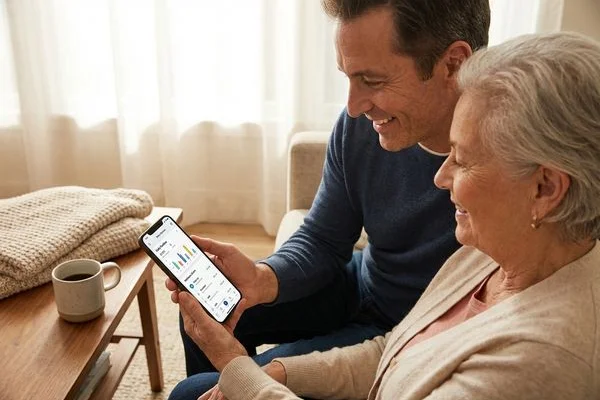
Whether you live across town or across the country, the monitoring dashboard and mobile app provide real-time visibility into your loved one's daily patterns, alerts, and wellness indicators from anywhere.
How Smart Monitoring Work
Needs Assessment
We evaluate your specific monitoring goals, your loved one's daily routine, the home layout, and connectivity requirements to design a monitoring plan that fits naturally into their lifestyle.
System Design
Based on the assessment, we recommend a customized combination of sensors, wearables, and smart devices that provides comprehensive coverage without feeling intrusive or overwhelming.
Professional Setup
Our technicians install and configure all devices, connect them to the monitoring platform, set up family notifications, and ensure reliable connectivity throughout the home.
Family Training
Both the senior resident and designated family members receive thorough training on the monitoring dashboard, alert settings, emergency protocols, and ongoing device management.
Save $50,000+ Per Year With Home Safety Modifications
A one-time investment in smart monitoring costs a fraction of annual assisted living fees. Get a free assessment to see your potential savings.
Get a Free AssessmentSee Our Work

What Families Say About Smart Monitoring
"The smart monitoring system lets me check on my mother from across the country. I get alerts if something unusual happens, and she does not feel like she is being watched. When the system noticed she was not moving around the kitchen at her usual time one morning, I called and found she was feeling dizzy. We got her to the doctor before it became serious."
"Dad refused to wear the old-fashioned medical alert pendant. The fall detection smartwatch looks like a normal watch and he actually likes wearing it. When he tripped on the back patio, the watch detected the fall and sent us an alert within seconds. He was fine but the peace of mind is priceless."
"The medication dispenser alone has been transformative. Mom was constantly confused about whether she had taken her pills, and the consequences of missed or double doses were concerning. Now the dispenser handles everything and I get a notification if she misses a dose. One problem solved completely."
Common Questions About Smart Monitoring
Does smart home monitoring compromise my parent's privacy?
What happens when the system detects a potential fall?
Do I need a strong internet connection for smart monitoring?
How do motion sensors establish baseline patterns?
Can smart monitoring help with medication management?
What is the difference between self-monitored and professionally monitored systems?
Will my parent find the technology difficult to use?
Can smart monitoring be integrated with existing smart home devices?
Related Home Safety Solutions
Fall Prevention
Expert-recommended modifications including grab bars, improved lighting, and non-slip surfaces to prevent falls.
Learn More →Safety Assessments
Room-by-room safety assessments identifying fall risks, accessibility barriers, and recommended modifications.
Learn More →Care Directory
Nationwide directory of vetted assisted living, memory care, and independent living communities with reviews and cost insights.
Learn More →Get Your Free Smart Monitoring Assessment
Take the first step toward a safer home. Our certified specialists help you understand your options, estimated costs, and potential savings versus facility care.
Get a Free Assessment